Buying your first home is an exciting milestone, but it can also feel overwhelming. Between saving a deposit, understanding government support, comparing home loans and navigating the property market, there are several things to consider before purchasing your first home in Victoria.
Before you panic, here’s the aid: eligible buyers may be able to access a range of Victorian and Australian government grants, concessions and home buyer schemes designed to make home ownership accessible and affordable. These include the First Home Owners Grant Victoria (FHOG), stamp duty exemptions and concessions, the First Home Guarantee and the Australian Government’s Help to Buy shared equity scheme.
Consider debt consolidation to combine multiple debts into one home loan and lower your interest costs!
While first home buyer assistance is available across Australia, each state and territory has its own eligibility criteria, property value caps and benefits. For example, the first home buyers grant VIC differs from the grants available in Queensland, New South Wales and other states, so it’s important to understand the support that’s specifically available if you’re purchasing property in Victoria.
As experienced Melbourne mortgage brokers, we help first home buyers understand their borrowing power, navigate government incentives and choose the right home loan for their circumstances. In this guide, we’ll explain everything you need to know about the first home buyers grant VIC, including the eligibility, application process, grant payment and more.
Who is Eligible for the First Home Buyers Grant VIC?
To receive the First Home Buyers Grant VIC, you must satisfy all eligibility requirements set by the Victorian Government. These rules are designed to ensure the grant helps genuine first home buyers purchase or build a home to live in.
Use home equity to purchase an investment property.
The following eligibility criteria apply to every applicant named on the property title, so if you’re buying with a partner, both of you must meet the relevant requirements.
Be a First Home Buyer
The first home buyer grants are only available to those applicants who have not previously owned residential property in Australia. Anything from a house, townhouse, unit or apartment, or even a vacant residential land with a home later built on it, must not be in your name. If any applicant has previously owned or held an ownership interest in residential property in Australia, you generally won’t qualify for the grant.
Divorce doesn’t automatically change mortgage obligations; find out what to do with your mortgage after separation.
Be an Australian Citizen or Permanent Resident
At least one applicant should be an Australian citizen or permanent resident at the time of settlement or when construction is completed for a new build. Temporary visa holders are generally not eligible for the grant, with one exception. For settlements from 26 November 2025, New Zealand citizens are also eligible to apply for a VIC FHOG, regardless of special category visa status.
Be 18 Years Old or Older
Applicants must be at least 18 years or older when applying for any of the grants. In limited circumstances, the Commissioner of State Revenue may approve applications from people under 18, but this is very uncommon.
With rentvesting, live your dream by renting where you love and investing where you can afford.
The Property Must Be a New Home
The grant is only available for new residential properties with a total value of $750,000 or less. Eligible properties may include:
- New townhouses
- New apartments
- Off-the-plan purchases
- Substantially renovated homes
- Owner-builder properties
While established homes that have previously been lived in are generally not eligible for the Victoria First Home Buyers Grant, you may still qualify for other first home buyer concessions, such as the stamp duty relief.
Already bought your first home? Find out how to buy a second home using your equity on the first one!
Must Live in the Home
The property must be your principal place of residence. Generally, you ought to move into the home within 12 months of settlement or construction being completed, and you have to live there continuously for at least 12 months.
In case your circumstances change, you can always seek advice from your mortgage broker or lender before moving out, since failing to meet the residency requirement may affect your eligibility.
Read: Fixed Rate vs Variable Rate Home Loan in 2026.
You Only Receive the Grant Once
Everything from the first home owners grant VIC to another Australian state or territory grant generally cannot be claimed again.
Make sure to confirm your eligibility before you sign any contract. I have seen buyers assume they qualify for the grants only to discover later that a previous ownership interest or residency issue makes them ineligible. A quick eligibility check before purchasing can help avoid costly surprises. Try our First Home Owner Grant calculator to find out whether you’re eligible for the FHOG.
What is the First Home Owners Grant Victoria?
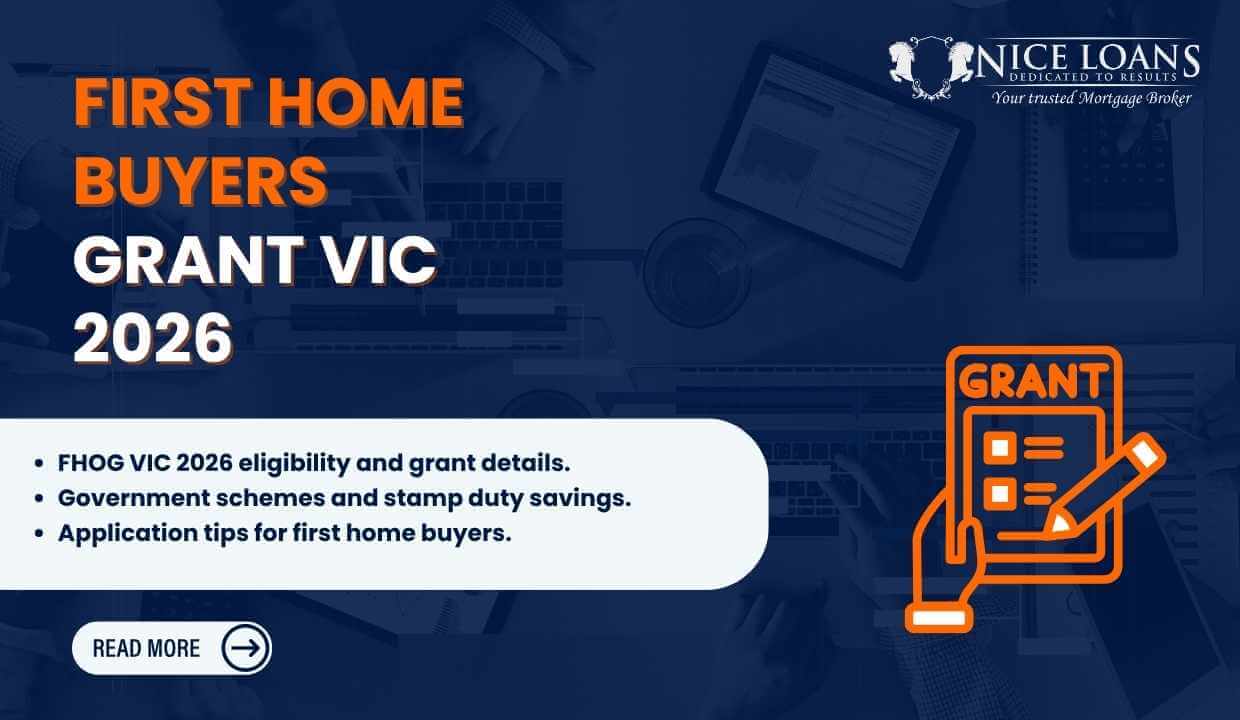
The First Home Owners Grant Victoria (FHOG) is a Victorian Government initiative that helps eligible first home buyers purchase or build a new home. Administered by the State Revenue Office (SRO), the grant provides a one-off payment of $10,000 to eligible applicants who buy or build a qualifying new residential property in Victoria.
The Victoria First Home Buyers Grant aims to make homeownership available for the less privileged by reducing some of the upfront costs associated with buying or building a first home. Different from a home loan, the grant does not need to be repaid since it’s provided and not borrowed.
Try Trust Home Loans to improve asset protection and tax flexibility.
The FHOG VIC can be used alongside other government assistance programs like the Victorian stamp duty exemptions and concessions, the Australian Government’s First Home Guarantee and the Help to Buy Scheme, if you qualify.
As of 2026, the grant is available for eligible new homes valued up to $750,000 anywhere in Victoria. This includes newly built houses, newly constructed townhouses, new apartments and units, off-the-plan properties, homes renovated substantially (meet the government’s definition of a new home), and finally owner builder projects that meet the eligibility requirements.
To receive the grant, one must genuinely intend to live in the property as a principal place of residence. Investment properties and holiday homes are thus not eligible.
You ought to remember that although the 1st home owners grant VIC provides valuable financial assistance, it’s only one part of the support available to Victorian first home buyers. Depending on your circumstances, you can qualify for other grants that can further reduce the cost of buying your first home.
| Feature | First Home Owners Grant Victoria (2026) |
| Grant Amount | $10,000 |
| Grant Target | First Home Buyers Only |
| Eligibility | Australian citizen or permanent resident |
| Property type | New Homes |
| Maximum Property Value | $750,000 |
| Must live in the property? | Yes |
| Need to repay? | No |
What Other First Home Buyer Assistance is Available in Victoria?
While the first home owners grant, Victoria is one of the best known incentives for first home buyers, it isn’t the only government support available. Depending on your circumstances, you may also be eligible for stamp duty savings, low-deposit home loan schemes and shared equity programs that can significantly reduce the upfront costs of purchasing your first home.
Understanding how these programs work and whether they can be combined can help you maximise the financial assistance available.
5% Deposit Scheme (Formerly Home Guarantee Scheme)
The 5% Deposit scheme enables eligible first home buyers to purchase a home with as little as 5% deposit, and eligible single parents or legal guardians with 2%, without paying Lenders Mortgage Insurance. It was on 1 October 2025 that the federal government renamed and expanded the Home Guarantee Scheme to the 5% deposit scheme.
Without having to save a full 20% deposit, first home buyers are guaranteed up to 15% for a 5% deposit or up to 18% for a 2% deposit. The best part is that, despite not being a cash grant, the government also doesn’t take a stake in your home; it simply guarantees responsibility.
Related: Family Home Guarantee Scheme for Single Parents.

Help to Buy Scheme
The Australian Government’s Help to Buy Scheme is a shared equity program designed to reduce the amount eligible buyers need to borrow. Under the scheme, the government may contribute up to 30% of the purchase price for an existing home and up to 40% of the purchase price for a new home.
Eligible buyers generally need only a 2% deposit, with the government taking an equity share in the property. When the property is sold, or the government’s share is bought out, it shares proportionally in any capital gain or loss.
Get yourself a buyer’s agent to represent your interests in property purchases.
Temporary Off-the-Plan Duty Concession
Victoria also offers a temporary stamp duty concession for eligible off-the-plan apartments, units and townhouses. Under the current arrangements, the concession applies to eligible contracts entered before 21st October 2026. The Victorian Government has announced an extension until 21 April 2027, subject to legislation.
Separate from the first home buyer exemption, it can provide additional savings depending on the property and your eligibility.
Stamp Duty Exemptions and Concessions
Stamp duty is often one of the highest upfront costs when buying a property, but eligible first home buyers may pay significantly less or nothing at all. As of 2026, no stamp duty is generally payable on eligible homes valued up to $600,000, and a concessional rate applies to eligible homes valued between $600,001 and $750,000. Once the purchase price exceeds $750,000, the first home buyer concession no longer applies.
For many buyers, the stamp duty exemption can save tens of thousands of dollars, making it one of the most valuable first home buyer benefits available in Victoria.
Ultimately, every scheme has different eligibility requirements, property price caps and lender participation rules. Before making an offer on a property, it’s worth confirming which grants and concessions you qualify for, as combining multiple programs could potentially save you tons in upfront costs.
Transfer an existing home loan to a new property with home loan portability.
How to Apply for the First Home Owner Grant Victoria?
Applying for the first home owners grant in Victoria is generally a straightforward process, especially if you’re purchasing your property with a home loan. In many cases, your lender or mortgage broker will help organise the application as part of your finance process, ensuring the required documentation is submitted before settlement.
If you’re not borrowing through a participating lender or you’re an owner builder, you can also apply directly through the Victorian State Revenue Office (SRO).
Apply Through Your Bank or Mortgage Broker
For most first home buyers, this is the simplest and fastest way to apply. Banks, credit unions and many lenders act as approved agents for the Victorian State Revenue Office, meaning they can assess your eligibility and lodge your First Home Buyers Grant VIC application on your behalf.
Buy property in Australia while living overseas with Australian expat home loans.
The process is simple and generally involves:
- Arrange your home loan: Once your lender is chosen and your home loan approved, your lender or mortgage broker will determine whether you’re eligible for the grant or any other first-home buyer incentives.
- Complete the application: Your lender will provide the required First Home Owner Grant application forms and guide you through completing them correctly.
- Provide supporting documents: You’ll need documents like proof of identity, permanent residency documentation, contract of sale or building contract, evidence of any name changes if required and any additional documents requested.
- Identity verification: Your lender will complete identity verification checks before lodging the application.
- Application Submission: Once everything has been verified, your lender submits the application to the State Revenue Office for processing.
Since the application is lodged before settlement, eligible buyers purchasing a new home will usually receive the grant at settlement, allowing the funds to be used towards the purchase.
Take a look at home loan features in Australia to secure the best among all available.
Apply Directly Through the State Revenue Office (SRO)
You can also submit your application directly to the Victorian State Revenue Office if you’re not using a participating lender, you are an owner-builder, your lender is unable to lodge the application, you missed lodging the application through your lender, or you simply prefer to apply yourself.
When applying directly, you’ll need to complete the First Home Owner Grant application form, gather the required supporting documents, verify your identity and finally submit your application through the SRO.
Learn how to pay off your mortgage early and save thousands on interest.
When Does the First Home Buyers Grant VIC Get Paid?
One of the most common questions first home buyers ask is when they’ll actually receive the First Home Owners Grant (FHOG). The answer depends on whether you’re buying a new home, building a home, or applying directly through the Victorian SRO.
For most buyers, the timing of the payment means the grant cannot be used to form your initial deposit when signing a contract. Instead, it is generally paid later in the purchasing or building process.
| Buying or Building Scenario | When the Grant is Usually Paid |
| Buying a new home through an approved lender | At settlement |
| Buying a new home and applying directly through the SRO | After the settlement, once approved |
| Building through a registered builder | At the first progress payment (approved agent applications) |
| Building and applying directly to the SRO | After the Certificate of Occupancy or Certificate of Final Inspection is issued, and the application is approved |
| Owner Builder | After occupancy requirements are met and the application is approved |
When Buying a New Home or Off-the-Plan Property
If you’re purchasing a newly built home or an eligible off-the-plan property and your application is lodged through your lender, the $10,000 First Home Owners Grant is generally paid at settlement.
This means the funds are available when ownership of the property transfers to you and can help reduce the amount you need to contribute at settlement.
If you apply directly through the State Revenue Office instead of an approved agent, the grant is generally paid after settlement once your application has been assessed and approved.
Discover ways to negotiate your home purchase to lock in the best property offers ever.
When Building a Home
If you’re building your first home through a registered builder and your application is lodged by your lender, the grant is generally paid at the first progress payment under your building contract.
If you apply directly to the SRO, payment is generally made after the certificate of occupancy or certificate of final inspection has been issued, and your application has been approved.
As an Owner Builder
Owner builders must apply directly through the Victorian State Revenue Office. If your application is approved, the grant is generally paid after the required occupancy documentation has been issued and all eligibility requirements have been satisfied.

How to Improve Your Chances of a Successful First Home Buyer Grant Application?
Applying for the First Home Buyers Grant VIC is generally straightforward, but mistakes or missing information can delay your application or, in some cases, result in it being declined. Taking the time to understand the eligibility requirements and preparing your documentation before you apply can help make the process much smoother.
Confirm Eligibility Before You Apply
Before committing to a property, make sure you satisfy the eligibility requirements for the first home buyers grant VIC.
For instance, check that you meet the citizenship or permanent residency requirements. Also, confirm that you are purchasing or building an eligible new home, and that you haven’t previously owned a residential property in Australia. You should also intend to live in the property as your principal place of residence. If you’re buying with a partner, make sure that they also meet the relevant criteria.
Prepare Your Documents Early
Having your paperwork ready before lodging your application can help prevent unnecessary delays. Depending on the grant or scheme you’re applying for, you may need:
- Proof of identity
- Australian citizenship or permanent residency documentation
- Your contract of sale or building contract
- Additional statutory declarations or supporting documents, if requested
Use your super for your first home deposit!
Double-Check Your Application
Simple errors such as incorrect names, missing signatures or inconsistent information between your application and supporting documents can delay approval. Before you submit your application, make sure to check that all personal details are correct and every required section has been completed.
Meet the Residency Requirement
Receiving the grant is only part of the process. To remain eligible, you must continue to meet residency requirements, including moving into the property within the required timeframe and living there as your principal place of residence for the required continuous period.
Seek Professional Advice Before You Buy
Government grants, stamp duty concessions and federal home buyer schemes all have different eligibility rules and property value limits. Speaking with an experienced mortgage broker before signing a contract can help you understand which government incentives you may qualify for, how much to borrow, whether you’re eligible for multiple first home buyer schemes and how each grant fits into your overall purchasing budget.
Common Mistakes First Home Buyers Make When Applying For Government Grants in Victoria
Government assistance can make a significant difference when purchasing your first home, but many buyers miss out on opportunities or experience delays because they misunderstand the requirements.
Assuming Automatic Qualification as a First Home Buyer
As simple as it seems, one of the biggest misconceptions is that anyone purchasing their first home automatically qualifies for every available government benefit. While you may be buying your first property and ticking the most important bracket, eligibility depends on several other factors, too. It is important to ensure your eligibility before signing a contract.
Explore the difference between conditional and unconditional approval.
Buying an Ineligible Property
The first home buyers grant VIC is generally available for eligible new homes and not established properties. Some buyers assume any property purchased as their first home will qualify, but the grants have specific requirements around the purchase price, whether the property was previously occupied and if it meets the government’s definition of a new home.
Treating Government Grants as Your Entire Deposit
A common mistake homeowners make is assuming the government grants can be used immediately towards the deposit when signing a contract. In most cases, the grant is paid later in the process, such as at settlement or during construction. This means buyers still need to have enough funds available for contract deposit, conveyancing fees, building inspections, loan application costs, and other purchasing expenses.
Waiting Until After Making an Offer to Understand Your Options
Many buyers start searching for properties before understanding their borrowing capacity or available government assistance. Before you attend inspections or make offers, it can be helpful to understand how much you can realistically borrow, which government schemes you may qualify for, how much deposit you need and what your expected repayments will be. Having this information early can help you search within a realistic price range and make stronger purchasing decisions.
Ready to Apply?
For many Victorians, saving a deposit is only one part of the challenge. Upfront costs like stamp duty, lender requirements, conveyancing fees and other purchasing expenses all impact how quickly one can enter the property market. Therefore, for those struggling, first-home buyer grants can make homeownership more achievable.
If you’re looking to buy a new home and hoping to save yourself some bucks, contact us at Nice Loans, your trusted mortgage specialist in VIC, and explore all available government assistance programs for support from application to home loan settlement.
FAQs
Can I use the First Home Loan Grant as part of my deposit when applying for a home loan?
Generally no. The First Home Owners Grant VIC is usually paid at settlement for eligible purchases made through an approved lender, or later, depending on your application method and circumstances. Since the grant is not usually available when you sign the contract, buyers should not rely on it as their initial deposit.
Can I get the First Home Owner Grant and the First Home Guarantee?
Yes, eligible buyers may be able to access both the FHOG and the first home guarantee scheme because they serve different purposes. You must meet separate eligibility requirements for each scheme, including income limits, property price caps and owner-occupier requirements.
Can I get the FHOG and stamp duty exemption in Victoria?
Yes, eligible first home buyers can combine the First Home Owners Grant with Victorian stamp duty savings.
Is the First Home Owners Grant available for apartments and units?
Yes, apartments and units can qualify for the FHOG if they meet the requirements. The property must generally be a qualifying new home, meet the value threshold and become your principal place of residence.