Choosing between a fixed rate home loan and a variable rate home loan is probably one of the most important financial selections you’ll need to make when buying property. Whether you’re purchasing your first home, upgrading to a larger property, refinancing your existing mortgage, or expanding your investment portfolio, selecting the right loan structure can potentially save you thousands of dollars over the life of your mortgage.
As a mortgage broker myself, I have encountered hundreds of Australians struggling to navigate the changing interest rate environments. One thing I have learned is that there is no universal best home loan. The right choice depends on your financial goals, income stability, risk tolerance and future plans. Deciding accordingly is vital.
Buying your first home? Check out our first home buyer’s checklist to stay prepared!
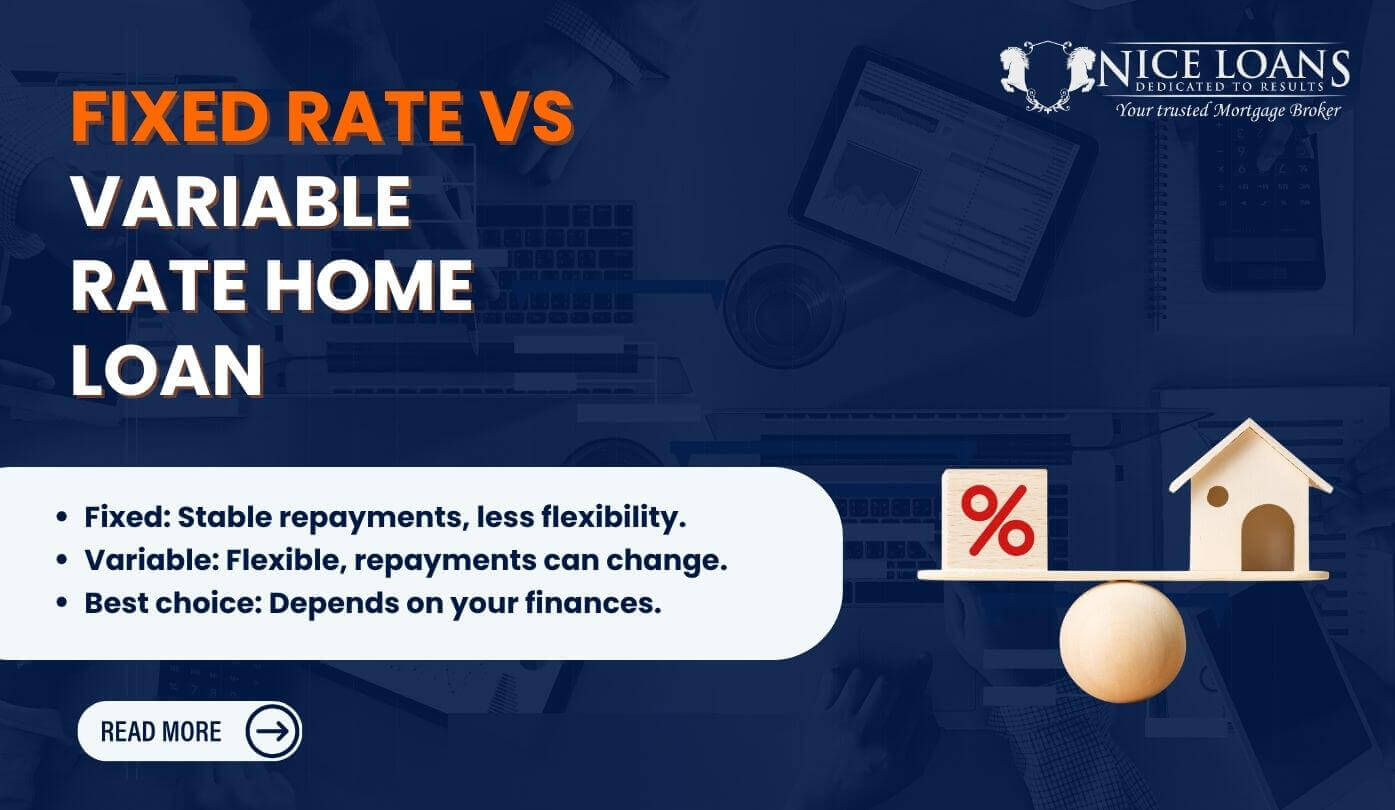
Understanding Fixed vs Variable Rate Mortgage Australia
Let’s start from scratch: a home loan generally comes in three main structures, including:
- Fixed rate home loan
- Variable rate home loan
- Split home loan (combining fixed and variable)
Each option has advantages and disadvantages, and choosing the right one depends mostly on your personal circumstances rather than trying to predict exactly where interest rates will move.
Which is why, at Nice Loans, we encourage clients to focus on selecting a loan that supports their long-term financial strategy instead of trying to beat the market.
Find out how mortgage works after your divorce!
Fixed Rate Home Loans
A fixed rate home loan allows you to lock in your interest rate for a set period, usually between 1 and 5 years, although some lenders offer terms of up to 10 years.
During the fixed period, both your interest rate and minimum repayments remain unchanged regardless of movements in the Reserve Bank of Australia’s cash rate or lender rate changes. For borrowers who value certainty and consistent budgeting, this can provide significant peace of mind.
Once your fixed term expires, the loan usually reverts automatically to the lender’s standard variable rate unless you refinance or choose another fixed rate option.
Hire a buyer’s agent to represent your interests in property purchase.
Variable Rate Home Loans
A variable rate home loan has an interest rate that can move up or down over time. The rate generally changes when lenders adjust their pricing, often influenced by movements in the Reserve Bank of Australia’s official cash rate, funding costs and broader economic costs. Unlike fixed loans, variable mortgages offer greater flexibility and usually include a wider range of useful home loan features too.
Find out how to use existing home equity to fund a second property purchase!
Split Home Loan
A split loan basically combines the advantages of both fixed and variable loans. Instead of placing your entire mortgage into one loans type, you divide it into two separate portins. For example, your home loan could be 50% fixed and 50% variable or 70% fixed and 30% variable.
The split can often be customised depending on the lender, so you can pitch in your demands when asked.
Did you know you could secure a home loan despite having low income?
Difference Between Fixed and Variable Rate Home Loan
| Fixed Rate Home Loan | Variable Rate Home Loan |
| Interest rate remains the same | Interest rate can increase or decrease |
| Repayments remain stable | Repayments may change |
| Protection against rising rates | Benefits if rates fall |
| Limited flexibility | Highly flexible |
| Break costs may apply | Usually no break costs |
| Limited extra repayments | Unlimited extra repayments (varies by lender) |
| Offset account is often unavailable | Offset account is commonly available |
| Redraw usually restricted | Redraw generally available |
Transfer existing home loan to a new property with home loan portability.
Pros and Cons of a Fixed Rate Home Loan
The following are the advantages and limitations of a fixed rate home loan broken down:
Advantages
Predictable Repayments: One of the biggest advantages of Fixed rate home loan is certainty. Your repayments remain the same throughout the fixed period, making household budgeting much easier. Families with regular financial commitments often appreciate knowing exactly what their mortgage repayment will be each month.
Protection against interest rate rises: If interest rates increase during your fixed period, your repayments won’t change. This protection can be particularly valuable during periods of rising inflation or economic uncertainty.
Purchase your dream property at just 5% Deposit with the Australian Government 5% Deposit Scheme.
Peace of mind: Many borrowers simply prefer certainty over uncertainty. Rather than having to worry about every Reserve Bank announcement, you know exactly what your repayments are and will be locked in for the agreed period. This means less stress and more peace.
Rate Lock Options: If you’re wondering what a rate lock is, it is a facility that allows borrowers to secure today’s fixed rate while their property purchase is being completed. This can be particularly useful when settlement is several months away.
Consider property investment for capital growth and steady rental income.
Limitations
Regardless of the endless positives, there are also certain trade-offs that you need to be aware of.
No benefit if rates fall: If market interest rates decrease after you’ve fixed your loan, your interest rate generally remains unchanged until your fixed period expires. This means borrowers may miss out on lower repayments available on variable loans.
Limited Flexibility: Many fixed loans restrict additional repayments, redraw facilities or offset accounts and refinancing options. Each lender has different policies, so its imporant to understand these limitations before committing.
Break costs: Ending a fixed rate loan early can result in substantial break costs. This may happen if you refinance, significantly reduce the loan balance, sell your property, pay off the loan early, or switch lenders. Depending on market conditions and the remaining fixed period, these costs can sometimes amount to thousands of dollars.

Pros and Cons of a Variable Rate Home Loan
Given the fluctuating interest rates in the market, variable rate home loans have both pros and cons.
Advantages
Greater flexibility: Variable loans are designed for borrowers who want more control over their mortgage. Most lenders allow unlimited extra repayments, redraw facilities, offset accounts, refinancing without break costs, and loan top-ups. These features can help reduce interest over the life of your loan.
Potential savings if rates fall: If interest rates decrease, your repayments may also reduce. Alternatively, many borrowers choose to continue making the same repayment amount, allowing them to pay off their mortgage faster while saving interest.
Faster loan repayment: Because extra repayments are generally unrestricted, borrowers can significantly reduce both their loan term and total interest payable.
Read: How Much Do I Need for a House Deposit?
Limitations
Repayments can increase: The biggest drawback is the uncertainty that comes with variable interest rates. If the interest rate rises, your mortgage repayments also increase. This means borrowers should ensure they have enough financial buffer to absorb future rate increases.
Budgeting becomes more complex: Changing repayments can make long-term budgeting very difficult, particularly in households where cash flow is limited.
Did you know that you can get a full stamp duty exemption if you’re a first home buyer?
RBA Cash Rate Home Loan Impact
As you know, it’s the Reserve Bank of Australia (RBA) that sets the official cash rate, which influences the cost of borrowing throughout Australia’s financial system. While lenders are not legally required to move mortgage rates whenever the cash rate changes, fluctuations often influence variable home loan interest rate pricing.
A higher cash rate generally places upward pressure on home loan interest rates, personal loans, and business lending. Lower cash rates can encourage borrowing by reducing interest costs. However, lenders also consider wholesale funding costs, competition and their own business strategies when setting mortgage rates.
Access first home buyer grants like FHOG, FHBG, FHSS to maximise savings.
Should I Go For a Fixed Rate or Variable Rate Mortgage in 2026?
Choosing between a fixed rate and variable rate home loan in 2026 ultimately comes down to your financial situation, your plans and how comfortable you are with changes to your mortgage repayments. There isn’t a one-size-fits-all answer, and the right option will depend on what matters most to you, whether that’s repayment certainty, flexibility or a balance of both.
A variable rate home loan may be a better fit if you have a stable income, can comfortably manage potential increases in repayments and want the flexibility to make additional repayments, use an offset account or refinance without significant restrictions. It can also suit borrowers who expect to sell, refinance or move home within the next few years.
Fund your self-managed build in stages with owner builder home loans!
A fixed home loan rate may be more suitable if you’re working with a tighter household budget, prefer knowing exactly what your repayments will be each month, or want protection from potential interest rises. Many borrowers also value the peace of mind that comes with repayment certainty, particularly during periods of economic uncertainty.
Being a mortgage broker, I have experienced working with a wide range of financial situations, and one thing I have constantly found is that borrowers are always looking for options that align with their goals and not always the lowest interest rate. Therefore, I am continually pushing to provide my clients with the confidence they need for such a massive purchase.
If you’re unsure whether a fixed, variable or split home loan is right for you, our team at Nice Loans, your trusted home loan expert, can be of great help. Based in Brisbane, we compare home loans from a wide range of Australian lenders and provide personalised advice to help you choose a loan structure that suits your needs, both now and into the future.
FAQs
What Happens When Fixed Rate Expires in Australia?
When your fixed period expires or ends, your home loan will usually revert to your lender’s standard variable rate (SVR) unless you refinance or negotiate a new loan arrangement. Also, since the standard variable rate is often higher than your previous fixed rate, it’s a good idea to review your mortgage before your fixed term expires. Many borrowers can save money by refinancing or negotiating a more competitive rate with their existing lender.
Can I Pay Off a Fixed Rate Home Loan Early?
Yes, you are allowed to pay off your fixed-rate home loan early, but you may incur break costs. These costs vary depending on your lender, your remaining fixed term, current wholesale interest rates and the outstanding loan balance.
Are Variable Rate Loans Better than Fixed Rate Loans?
Neither option is universally better. Variable loans provide greater flexibility and may save money if interest rates fall. Fixed loans provide certainty and protect borrowers from rising repayments. The better choice depends entirely on your financial circumstances and goals.
Should You Refinance When the Fixed Rate Ends?
In many cases, yes. When a fixed loan expires, borrowers often move onto a higher standard variable rate. Reviewing your options before your fixed term ends may help you secure a more competitive interest rate, improve loan features or reduce your monthly repayments. Consider speaking with your mortgage broker to weigh your options better.