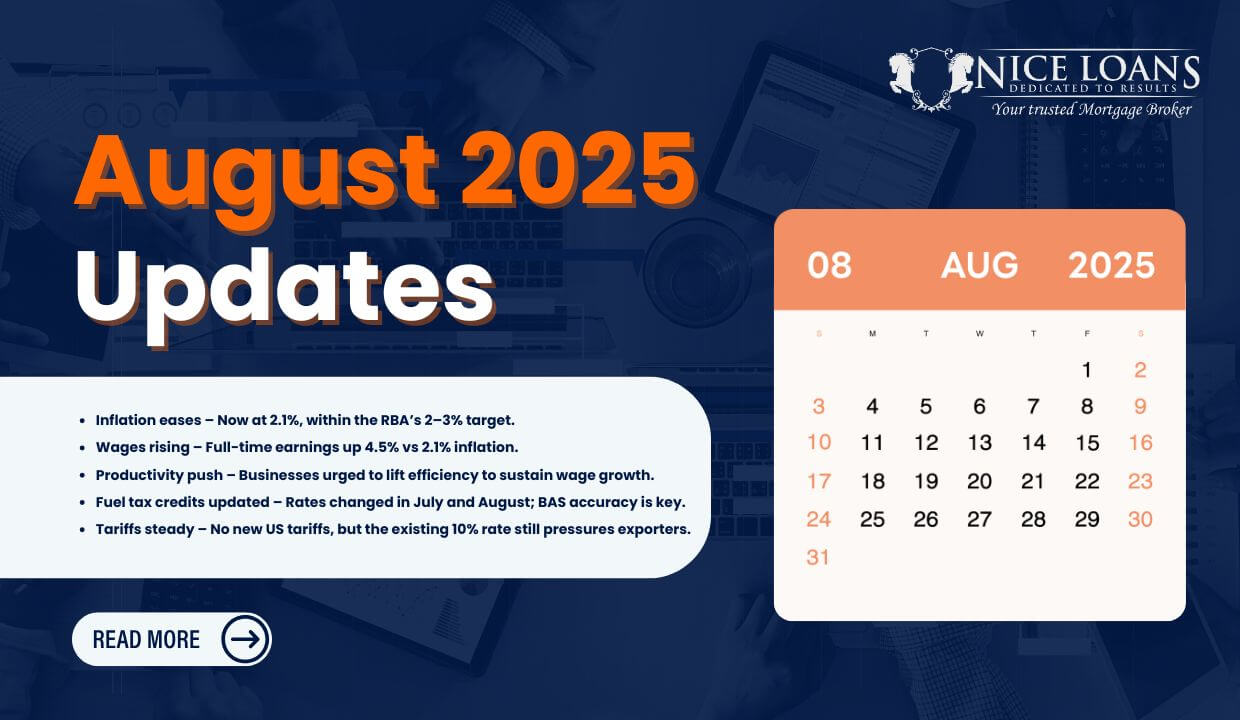
For this month’s newsletter, we cover a mix of economics, tax and tariffs news:
- Why the RBA is cautiously optimistic on inflation
- How to become more productive as wages keep rising
- Fuel tax credits: what’s changed and how to claim
- Australia escapes further tariff pain from US
Read on for the latest news.
Australia’s cost-of-living pressures eased further in the June quarter, with official figures confirming that inflation now appears to be under control.
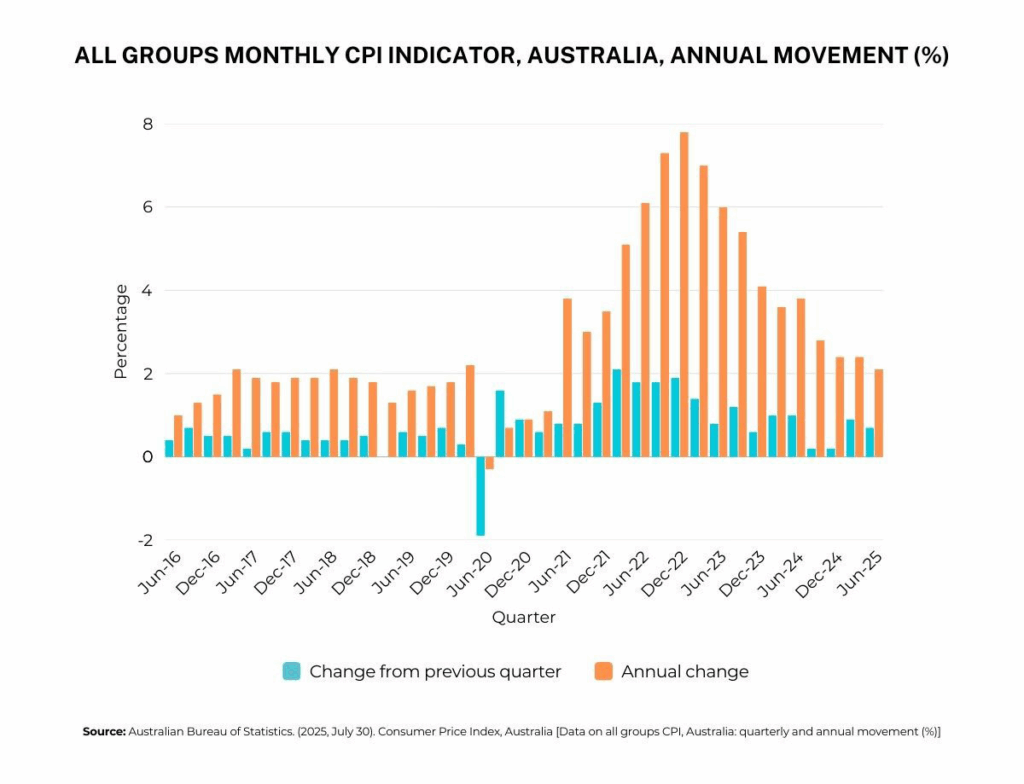
The Australian Bureau of Statistics reported headline inflation at 2.1% in annual terms – the lowest rate since 2021 and well inside the 2-3% target set by the Reserve Bank of Australia (RBA). By comparison, inflation was 2.4% in March and 3.8% in June last year. Trimmed-mean inflation, considered a more reliable guide, also fell to 2.7% from 2.9% in March and 4.0% a year earlier.
The RBA, in its August Statement on Monetary Policy, highlighted a mixed picture beneath the headline numbers. Prices for new dwellings and some consumer goods rose, reflecting stronger housing activity and the weaker exchange rate. However, offsetting factors included softer domestic travel prices, easing insurance costs and a decline in market services inflation, which is now close to its long-run average.
With long-term inflation expectations anchored at target, the RBA signalled cautious optimism that inflation is moderating sustainably.
Contact me if you’d like to understand what the inflation picture means for interest rates and your business finance position.

Pay packets are growing faster than prices, giving households more spending power, according to the latest data from the Australian Bureau of Statistics.
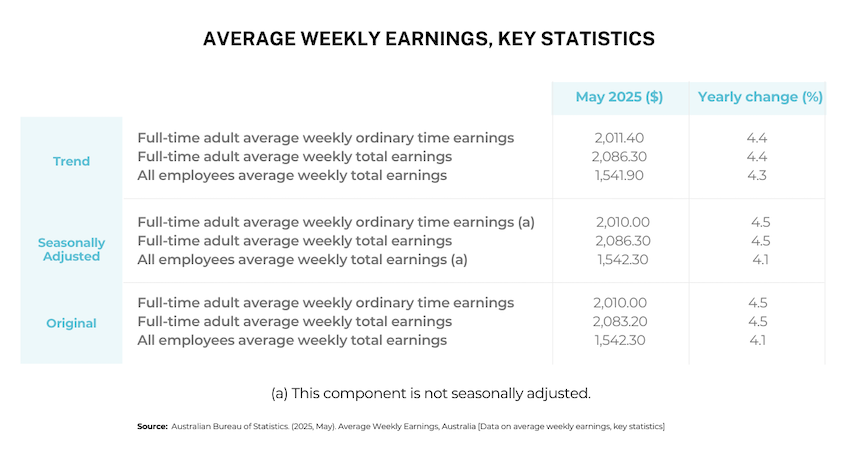
Average weekly ordinary time earnings for full-time adults hit $2010 in May 2025, which was 4.5% higher than the year before, and significantly more than the 2.1% annual inflation rate recorded in the June quarter.
However, Australian Industry Group CEO Innes Willox stressed that productivity needed to improve if real wages growth was to remain sustainable. He warned that without productivity gains, higher wages will simply feed inflation and erode workers’ purchasing power.
Five ways to make your business more productive:
- Embrace technology. Automating routine tasks can save time and reduce errors.
- Streamline processes. Regularly review workflows to cut out unnecessary steps.
- Invest in staff training. A skilled workforce is more efficient and adaptable.
- Set clear goals. Well-defined targets help teams stay focused and accountable.
- Monitor performance. Use data and feedback to track progress and identify improvements.
Fuel tax credit rates have changed twice recently – once on 1 July, when the road user charge increased for heavy vehicles on public roads, and again on 4 August, following the rise in the consumer price index.
According to the Australian Taxation Office (ATO), different rates apply depending on the type of fuel, when it was acquired and how it was used. If your claims are under $10,000 each year, the simplest approach is to use the rate that applies at the end of your BAS period. You can also use the ATO’s fuel tax credit calculator to check your entitlement.
When completing your BAS, the ATO has advised businesses to:
- Ensure you apportion fuel used correctly, so you claim your full entitlement.
- Lodge online or via a registered practitioner for extra time.
- Keep complete records of purchases and use. Getting your claims right matters. If you’ve made an error, you can correct or adjust it, but accurate records and simplified methods will make the process much easier.
Business groups are urging policymakers to continue advocating for fairer trade arrangements. They argue that while Australia has avoided additional costs, the persistence of the 10% tariff could undermine competitiveness and limit opportunities for exporters across a range of industries.
Australian Chamber of Commerce & Industry (ACCI) CEO Andrew McKellar said the outcome was “the best we could have expected” under the circumstances, but stressed that the tariffs remain unjustified given Australia imposes no tariffs on US imports and has a strong trade deficit.
Business groups are urging policymakers to continue advocating for fairer trade arrangements. They argue that while Australia has avoided additional costs, the persistence of the 10% tariff rate could undermine competitiveness and limit opportunities for exporters across a range of industries.
Looking ahead, national business leaders said Australia must keep strengthening global partnerships and pressing for open trade to safeguard long-term economic growth and protect exporters from future disruptions.