Best of luck to you for the new financial year. Hopefully, you’ve made a positive start to FY26. Here’s what’s making news in the economy and commercial property market:
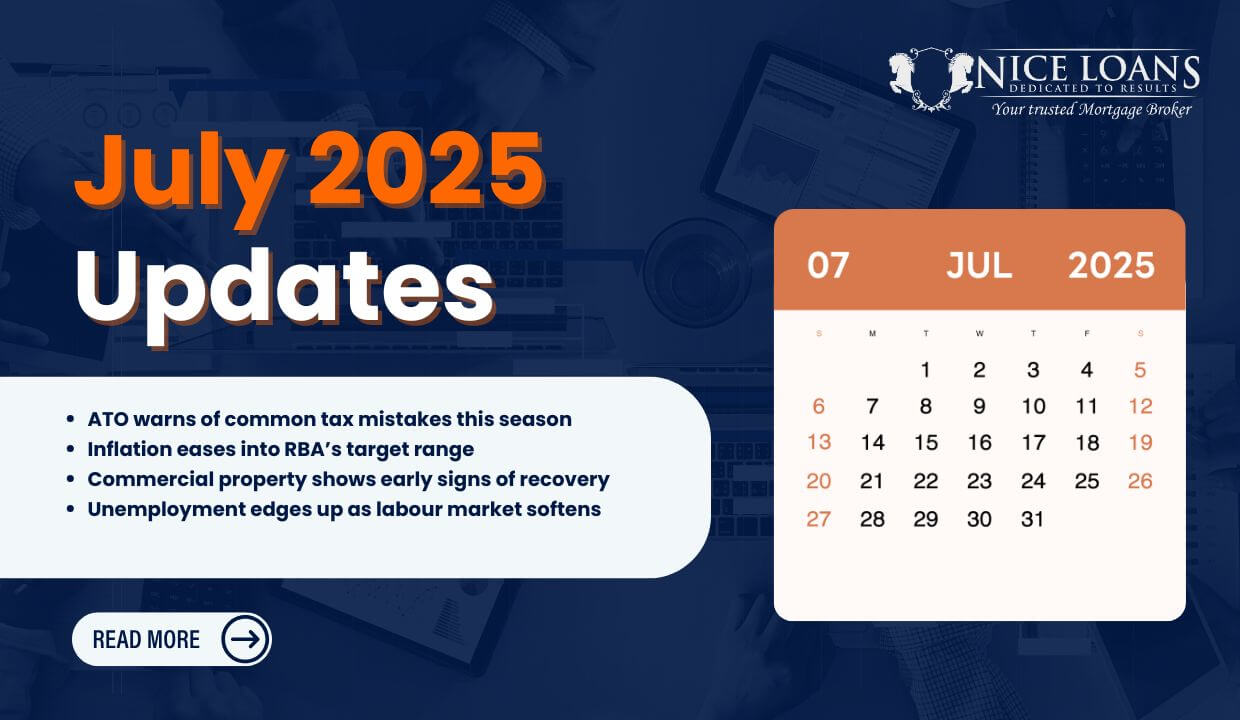
- ATO reveals common tax mistakes
- Positive inflation streak continues
- Commercial property outlook improves
- Labour market shows signs of strain
Read more below.

With tax season upon us, the Australian Taxation Office (ATO) has reminded small business owners and sole traders to avoid common mistakes that could delay processing or trigger follow-up checks.
One of the most frequent issues is not having the right access to ATO digital services, according to assistant commissioner Angela Allen. Businesses must ensure they’re set up with myID or a linked myGov account via the Relationship Authorisation Manager. Sole traders can continue using their personal myGov accounts to lodge directly.
The ATO also urged businesses to double-check that all forms of income are declared – including goods or services received through barter or in-kind arrangements. It’s also important to accurately record business losses and separate them from non-commercial losses, which are treated differently under tax law.
Another area of concern is record-keeping. Private use of business funds must be clearly tracked, with reliable documentation to support deductions and claims.
To help, the ATO has released a detailed small business toolkit covering topics such as asset write-offs, prepaid expenses and depreciation.
As always, the ATO’s message is simple: get your books in order early and avoid unnecessary stress at tax time.
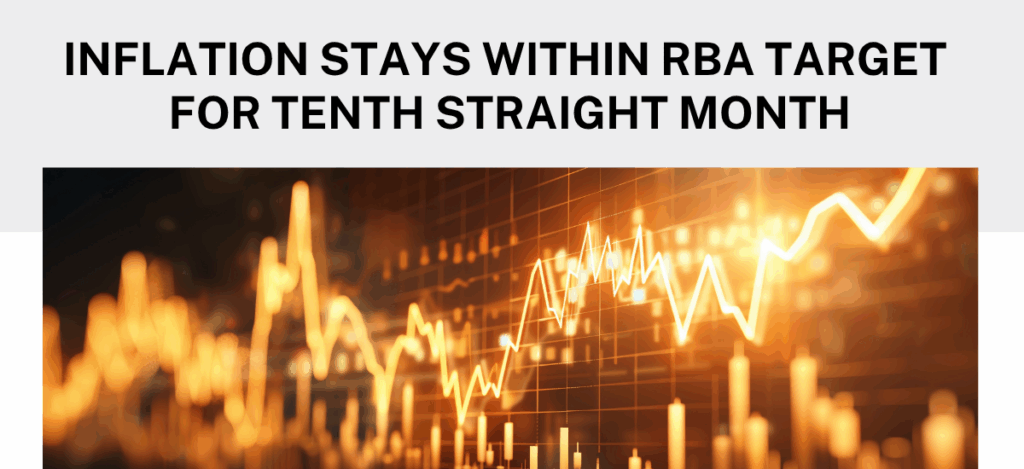
Australia’s inflation rate has continued to ease, with both headline and core measures now sitting comfortably within the Reserve Bank of Australia’s (RBA) 2-3% target range.
According to the Australian Bureau of Statistics, annualised inflation in May was 2.1% – down from 2.4% in April and 4.0% a year earlier. This was the tenth consecutive month that headline inflation had remained inside the RBA’s preferred band.
Meanwhile, the trimmed-mean inflation rate – which the RBA considers a more reliable measure of underlying inflation – also moderated. It came in at 2.4% in May, compared to 2.8% the month before and 4.4% the year before. Trimmed-mean inflation has now been within target for six straight months.

In its July 8 monetary policy announcement, the RBA said inflation had “declined substantially since its peak in 2022”, but noted that services inflation and domestic cost pressures remained persistent. The RBA expects inflation to return to the midpoint of its target range in 2026.
While the downward trend is encouraging, the RBA has signalled it will remain cautious and noted that inflation risks remain finely balanced, with global uncertainty and domestic cost pressures requiring close attention.

Australia’s commercial property market is showing early signs of recovery, with income performance improving across most sectors and investor sentiment gradually stabilising, according to KPMG’s latest market update.
The industrial sector continues to lead the way, supported by strong tenant demand and limited supply. It has now recorded two consecutive quarters of growth, with total returns reaching 3.3%. Retail property is also on more stable footing, driven by higher foot traffic from returning international visitors, students and office workers.
While office sector returns remain in negative territory, key indicators suggest conditions are no longer deteriorating. Vacancy rates have stopped rising, demand is strengthening for high-quality, well-located space and capital value declines are beginning to ease.
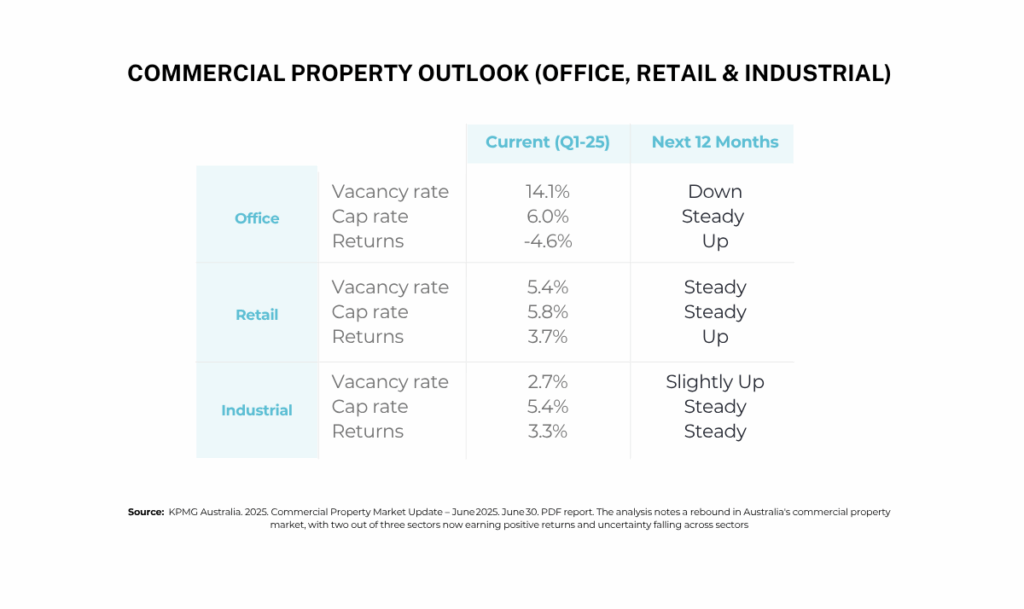
Importantly, KPMG’s uncertainty index has fallen across all commercial sectors, with a notable decline in office market volatility. Analysts point to interest rate cuts in early 2025, along with strong population growth and employment conditions, as key stabilising factors.
Still, KPMG cautions that global economic headwinds and structural shifts in tenant demand could affect the pace of recovery. Investors are advised to monitor asset quality and location closely in this evolving environment.
Let’s chat about a commercial loan pre-approval
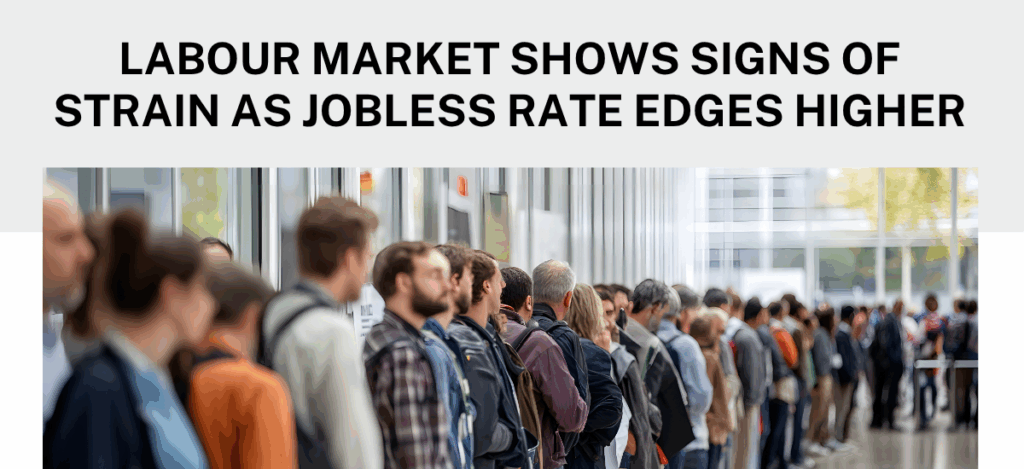
Australia’s labour market delivered a mixed result in June, with unemployment rising but more people entering the workforce, according to new data from the Australian Bureau of Statistics.
The unemployment rate increased to 4.3%, up from 4.1% in May and 4.0% in June 2024 – marking the highest level since November 2021. The underemployment rate also ticked up to 6.0%, compared to 5.9% the previous month.
At the same time, the participation rate climbed to 67.1%, up from 67.0% in May and 66.7% a year earlier – suggesting more people are looking for work or re-entering the job market.
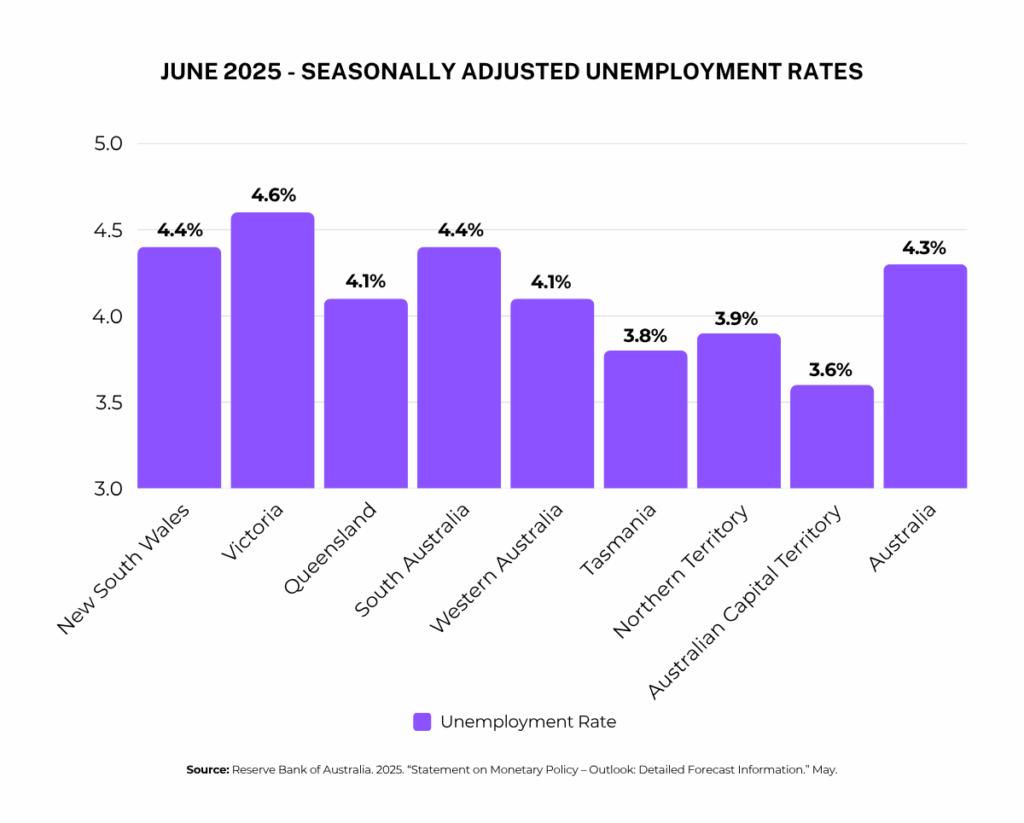
The Australian Industry Group, an employer association, said the rise in unemployment reflected soft conditions in the private sector. CEO Innes Willox noted the public sector has been propping up employment in recent quarters and warned that without stronger private investment, labour demand could continue to weaken.
The Reserve Bank of Australia acknowledged the labour market slowdown in its July monetary policy statement. While it still expects unemployment to remain in the low 4s through to 2026, it described current risks as “finely balanced”.