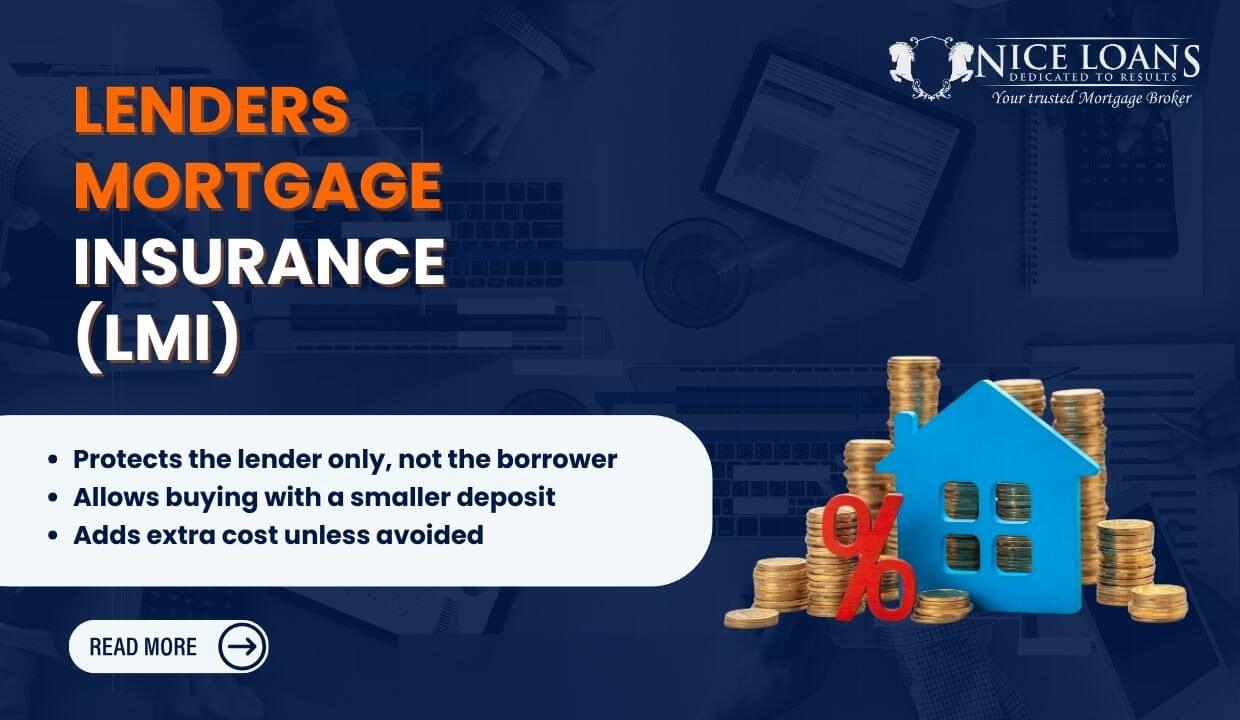
The Lenders Mortgage Insurance (LMI) is an insurance policy taken out by lenders to protect themselves against the risk of financial loss caused under circumstances where a borrower is unable to repay their home loan, thus the lender cannot recover the full outstanding loan balance. Designed to safeguard the lender’s interests, LMI should not be confused with Mortgage Protection Insurance, or MPI.
Where MPI is an optional insurance taken out by the borrower to help cover loan repayments in specific circumstances, such as death, permanent disability or involuntary unemployment, LMI exists solely to protect the lender. It does not provide any direct financial protection or benefit to the borrower.
The Lenders Mortgage Insurance covers any shortfall that may arise if the borrower bails on the loan and the property is sold for less than the remaining loan balance, including interest and associated costs, which is a common occurrence in such scenarios. Even with the LMI insurer compensating the lender, the borrower remains legally responsible for repaying the outstanding shortfall. Here, the insurer may seek to recover the amount directly from the borrower after settling the lender’s claim.
The one-off LMI premium is a guarantee for lenders, and even with the amount paid, the policy does not protect the borrower in the event of any financial hardship or default. Instead, the lender’s mortgage insurance enables lenders to lend higher loan-to-value ratio (LVR) loans by reducing their risk, allowing borrowers to enter the property market with a smaller deposit than would otherwise be allowed.
Buy your dream home with zero deposit with no deposit home loans!
How is the Lenders Mortgage Insurance (LMI) premium paid?
The lender’s mortgage insurance (LMI) is paid by the lender to the insurer during the settlement of a home purchase or refinance. The payment is a one-off premium that covers the lender for the entire life of the loan, which can last up to 30 years. The amount of the premium depends on several factors, including the lender, the loan amount, your loan to value ratio (LVR), and the size of your deposit.
You might be interested in: How to Calculate Rental Yield?
Even with the lender paying the premium to the insurer, the cost is usually passed on to the borrower. This is because LMI forms part of the lender’s cost of providing loan finance when a borrower is considered higher risk due to a smaller deposit. As a result, the borrower is responsible for covering the LMI premium even though the policy protects the lender rather than the borrower.
Borrowers typically have two options for paying the LMI premium. You can pay it upfront at settlement as a once-off cost, or it can be added to the loan amount and repaid over time as part of the home loan repayments. If the LMI is capitalised into the loan, the interest will be charged accordingly over the life of the loan, which also increases the total cost of borrowing.
As both LMI costs and payment options vary, remember to seek advice tailored to your situation. Your lender, mortgage broker, or financial adviser can explain how LMI applies to your loan and help you adapt the most suitable way to manage the cost.
Why do you pay the Lenders Mortgage Insurance?
Borrowers do not always have to pay the lender’s mortgage insurance. They are required in certain situations, most commonly when you’re borrowing a high percentage of the property’s value. In general, LMI applies when your loan exceeds 80% of the home’s value, and you do not have the standard 20% deposit usually required for a home loan. Without the deposit, it’s the LMI premium that ensures security on your loan.
When a borrower contributes a smaller deposit, the lender takes on a higher level of risk. If the borrower defaults and the property is sold for less than the remaining loan balance, the lender may suffer financial loss. LMI exists to protect the lender against this risk by covering any shortfall between the sale proceeds and the outstanding loan amount.
While it is necessary to understand that if you default on your loan or your property sells for less than you owe, it’s you who’ll need to cover the loss, with the LMI paid, borrowers can purchase a property sooner without waiting years to save a larger deposit, particularly, first home buyers can enter the property market earlier, making homeownership more accessible when opportunity arises.
Read: How Much House Can I Afford?
Does the LMI benefit the borrower at all?
While it is true that LMI does not directly benefit the borrower, it’s not entirely a disadvantage for borrowers who need it. Despite being designed purely to protect the owner, there is a reason why LMI is advised to numerous borrowers who struggle to save up a hefty deposit.
- Early Entry into the Market: With LMI, borrowers who do not have the 20% deposit saved up can purchase a property with a smaller deposit. This can be especially helpful for first-home buyers who may otherwise need to wait several more years before being able to buy.
Compare the pros and cons of debt recycling to decide whether it is the right option for achieving your long-term investment goals!
- Access to Loans: With Lenders Mortgage Insurance, the lender risk is minimised, thus enabling lenders to offer loans to borrowers with low deposits, making homeownership accessible to more people. If LMI hadn’t been an option, several potential buyers would have had limited or no borrowing options at all.
- Potential for Early Capital Growth: As a borrower and buyer, once you enter the property market, you can benefit from long-term property value growth earlier. Over time, this growth can outweigh the upfront cost of LMI, particularly in areas with strong or consistent market demand.
Do you not have sufficient cash available to use as your home loan deposit? With deposit bonds, secure your property without the upfront cost!
How much is the Lender’s Mortgage Insurance?
The cost of LMI varies depending on several factors, including the lender you choose, the size of your loan, and the amount of deposit you contribute. Because each lender and insurer assesses risk differently, the exact premium can be difficult to pin down; it will depend entirely on your individual circumstances. Here, a mortgage broker can help calculate the expected LMI cost based on your specific loan structure.
Generally speaking, the Lenders Mortgage Insurance (LMI) ranges from 1% to 5% of the loan amount. However, in high-risk situations, such as very small deposits, the percentage can be higher, reaching up to 6.5% of the loan. The smaller your deposit and the higher your loan to value ratio (LVR), the more LMI you are likely to pay. Online LMI calculators can also provide a helpful estimate, presenting a clearer idea of the potential cost before you apply for a loan.
Rent now with the option to buy later. Try the rent to buy scheme to achieve home ownership without a hefty deposit!

How can I avoid paying LMI?
One very straightforward way to avoid paying Lenders Mortgage Insurance (LMI) is to wait until you have the full 20% deposit before applying for a home loan. With a deposit of this size, your loan to value ratio (LVR) falls to 80% or less, removing the need for any LMI at all. However, for many buyers, this approach can be time-consuming, and rising property market prices can make it equally difficult to save the required amount while keeping up with the market fluctuations. In such a state, what can you do to achieve homeownership without the burden of LMI premiums wracking your brain?
Get approved for a low doc home loan and purchase your dream home with flexible income verification!
Use a guarantor for your Home Loan
Another effective way to avoid paying the LMI is by having a family member, usually a parent, act as a guarantor by using equity in their own property as security for a portion of your loan. When gathering the 20% deposit on your home loan feels out of reach, a guarantor can help bridge the gap by reducing the lender’s risk. With a family guarantor in place, you may be able to purchase a property with little or no upfront deposit. You can avoid paying the Lenders Mortgage Insurance (LMI) altogether, entering the property market sooner than you might have expected.
Discover the best home loan alternatives if you’re self-employed!
Generally, the guarantor takes on only a portion of the loan, typically the amount exceeding the 80% loan-to-value ratio (LVR). Once your loan balance is reduced or your property value increases, the guarantor can be released from the loan. However, you must remember that even though guarantor agreements can make homeownership more accessible, they do come with responsibilities. Consult your advisor to discuss the details!
Find out how much debt you have compared to your income; understand the Debt to Income ratio in Australia to improve your financial future!
Utilise government schemes
You may be able to avoid LMI by utilising the Australian government home buyer schemes. These initiatives are designed to support eligible buyers in entering the property market with less financial pressure and more confidence. One of the many well-known programs is the First Home Guarantee, which allows eligible first home buyers to purchase a property with a deposit as low as 5%, without paying the LMI. Under this scheme, the Australian government guarantees the remaining portion of the loan, reducing the lender’s risk.
If it so happens that you’re at a disadvantage in terms of partnered support, there is also the Family Home Guarantee, aimed at eligible single parents or single legal guardians with at least one dependent child. With this scheme, buyers can purchase a home with a deposit as low as 2%, without the LMI, obviously.
While both schemes are subject to eligibility criteria, income limits and property price caps, with limited places each financial year, they are a few among many influential initiatives for several potential homeowners.
Qualify for professional Waivers
Some borrowers may be able to avoid paying Lenders Mortgage Insurance (LMI) by qualifying for a professional LMI waiver. While it might seem strange or surprising, certain lenders offer these waivers to borrowers with specific professional standings due to their perceived income stability, career longevity and potential earnings. The idea stems from a strong assumption that a certain individual will have a prosperous financial station for a long time and thus pose less risk to the lender.
Professions commonly considered include doctors and medical professionals, teachers, lawyers, and accountants, among other recognised professionals. If eligible, borrowers can buy a home with a smaller deposit, often below the standard 20%, without paying the LMI. Given how not all lenders offer such waivers, the availability and conditions vary between lenders. To avoid disorder, working with a mortgage broker can help you identify sources that provide professional LMI waivers.
Access your home equity without selling through a reverse mortgage and home equity release!
Buy a cheaper property
While it might be an obvious option, several potential buyers overlook the fact that if you opt for a cheaper property, you can land a lower deposit amount. Buying a lower-priced property is a highly effective way to reduce or completely avoid Lenders Mortgage Insurance (LMI). Many buyers underestimate this powerful strategy. With LMI required if your loan exceeds 80% of the property’s value, choosing a more affordable home can significantly reduce the deposit needed to reach that threshold.
A lower purchase price means a smaller deposit, with the loan-to-value ratio (LVR) also lowered, so you can reach the 20% deposit mark sooner. Being open-minded during your property search makes a substantial difference. Don’t just focus on premium subscribers or ideal property types; consider nearby suburbs with more affordable pricing, emerging or growing locations with strong infrastructure plans, and properties that show potential for benefit with minor improvements over time.
Are you looking to invest in a property? Learn how to calculate your rental yield to find out your real profit after expenses!
Use Existing Equity
If you’re already a one-time homeowner, there is a chance you may have built up a significant amount of equity in your current home or investment property. Simply, equity is the difference between your property’s current market value and the outstanding balance on your loan. In this scenario, you wouldn’t need to provide a big deposit because the equity you have provided would be enough security for your lender.
By leveraging existing equity, you may be able to reduce or eliminate the need for a cash deposit. As a result, your overall loan to value ratio (LVR) is lowered, and you can avoid paying the Lenders Mortgage Insurance (LMI). This strategy is commonly used by property investors expanding their portfolio and homeowners looking to upgrade or access a more suitable home.
Check Out: Refinancing a Home Loan with Bad Credit.

Pros and Cons of Using an LMI
Pros
- Allows potential homeowners to enter the market sooner.
- By reducing the lender’s risk, LMI enables you to access higher loan amounts.
- Allows borrowers to keep money aside as savings instead of using it up for a large deposit.
Find out all the ways to use your super to buy a house and access your dream property with your super funds!
Cons
- LMI increases the overall borrowing cost when added to your loan.
- Only protects the lender in case of default, does not provide support to the borrower.
- LMI costs can vary and can be difficult to compare. The premiums differ between lenders and insurers, depending on loan size, LVR and individual risk.
Get a guarantor for your home loan to secure your application without a hefty deposit!
Can I get a refund if I repay my loan early?
Repaying your home loan early is a goal all borrowers wish to achieve. One of the more technical advantages, if it does come true, can be your eligibility for a partial refund of the Lenders Mortgage Insurance (LMI) you paid in the past. However, specific conditions apply. All loans covered by the LMI policy should be repaid in full, and any associated mortgages should also be released.
Wish to build your own home? Owner builder home loans are specialised construction loans that help you fund your build through the different stages!
The amount refunded depends mainly on timing; how soon did you repay the loan? Loans repaid within 12 months of settlement may qualify for a full refund, while those repaid between 12 and 24 months are generally eligible for around 40% of the total premium paid. While loans repaid after 24 months still qualify for a smaller refund, the amount decreases to 20% of the LMI premium.
Please note that any missed repayments affect the eligibility for refunds, and full refunds are not guaranteed. Early repayments are still great to reduce the financial impact of LMI, especially if you’re planning to refinance, sell or pay off sooner. Additionally, the stamp duty paid on the LMI is not refundable, and the calculated refund amount must meet the insurer’s minimum threshold for the refund to be processed.
Also Read: Negative Gearing vs Positive Gearing.
What happens if I am unable to repay my loan and my home is sold?
If you are unable to meet your loan repayments and no alternative arrangement is available, your property can be sold to cover the remaining amount you have yet to provide. However, in some cases, the sale price of the property may be less than the remaining loan balance, leaving what we call a shortfall. This shortfall is the difference between the amount owed to the lender and the proceeds from the sale of the property.
Why do you think pre-approving your home loan matters? Find out exactly how much you can borrow and help set your home-buying budget before you begin house hunting!
You must be well aware that, as a borrower, you remain legally responsible for repaying every amount borrowed under your name, even if the lender receives compensation from a Lenders Mortgage Insurance (LMI) policy. LMI is designed entirely to protect the lender, not the borrower, so while the insurer may repay the lender’s loss, they can also seek to recover the amount directly from you.
It’s pretty simple: if the selling price of your home is less than the amount you owe your lender, the said lender will receive their compensation through the LMI insurer, but you may still be required to pay the insurer the outstanding shortfall. Essentially, LMI makes sure your total debt is eventually repaid, either directly by you or through the LMI process.
Find out what stage of the application process you’re in by learning the differences between conditional approval and unconditional approval!
Do I need to pay LMI when refinancing or buying my next home?
The lender’s mortgage insurance (LMI) is specific to the loan and property it was originally taken out for, meaning it cannot be transferred to other financial institutions. If you decide to refinance with a new lender or a different loan, you will usually need to pay LMI again, given that the transaction is still considered high-risk when your LVR has exceeded the 80% mark.
Even with substantial repayments, your LVR may still be high depending on the original loan amount and the property value. However, if your property value has increased over time, your equity sees an equivalent rise, which can reduce the loan to value ratio (LVR). Mortgage brokers will often take this phenomenon into account when assessing whether LMI is required for your refinancing.
The same principles apply when purchasing your next home. If you haven’t built up sufficient equity in your current property or if your deposit for the new property is less than 20%, you may be required to pay LMI to secure the loan. Essentially, LMI is always tied to the level of risk for the lender rather than your repayment history, so it’s important to factor in potential LMI costs when planning your next property purchase to avoid financial strain.
Also Check Out: What are Bridge Loans and How Do They Work?
Is it better to pay LMI or wait till you have a bigger deposit?
The answer to whether it’s better to pay Lenders Mortgage Insurance (LMI) or wait until you have a larger deposit depends on several factors. What is your financial situation like? What’s the property you want? What amount do you have saved for it? All these, including the market performance, also play a big role. It’s important to consider the current property prices, the potential for growth in the area, and how long it might take to save the extra deposit.
In a growing market, waiting to save a larger deposit can often mean missing out entirely. What if prices rise faster than your savings? Your target might be harder to reach and potentially delay your entry into the market. In such cases, paying LMI to secure a property sooner is often a smarter move, even with the added expense.
See proven tips to pay off your home loan in only 10 years!
On the other hand, in a declining market, waiting until you can afford the standard deposit might save you from paying LMI and reduce the overall borrowing costs. However, also remember that markets don’t always wait, and properties with growth potential could be off in a blink, making early purchase with LMI a strategic choice.
Ultimately, the decision is yours; your personal circumstances and financial goals shape the position you will find yourself in. Consulting with a mortgage broker or financial adviser can help you come to a conclusion that best suits your situation.
With the Australian Help to Buy Scheme, Homeowners can purchase their dream property with only 2% deposit. Grab the chance now!

The Lenders Mortgage Insurance (LMI) plays a crucial role in the Australian property market. With LMI, potential buyers can secure home loans with smaller deposits and access properties that they might not otherwise be able to. If you believe you can save a substantial deposit and are willing to wait till you reach the conditional threshold, LMI may not be necessary. However, for buyers who want to enter the property market sooner and are confident they can manage the additional cost of LMI, it can be a smart strategy.
At Nice Loans, your trusted mortgage broker in Brisbane, our team of professionals can help you navigate the complexities of LMI, evaluate your options, and choose the path that best aligns with your home ownership goal. Book a free consultation to discuss how LMI fits into your home loan journey and make the big decision today!