
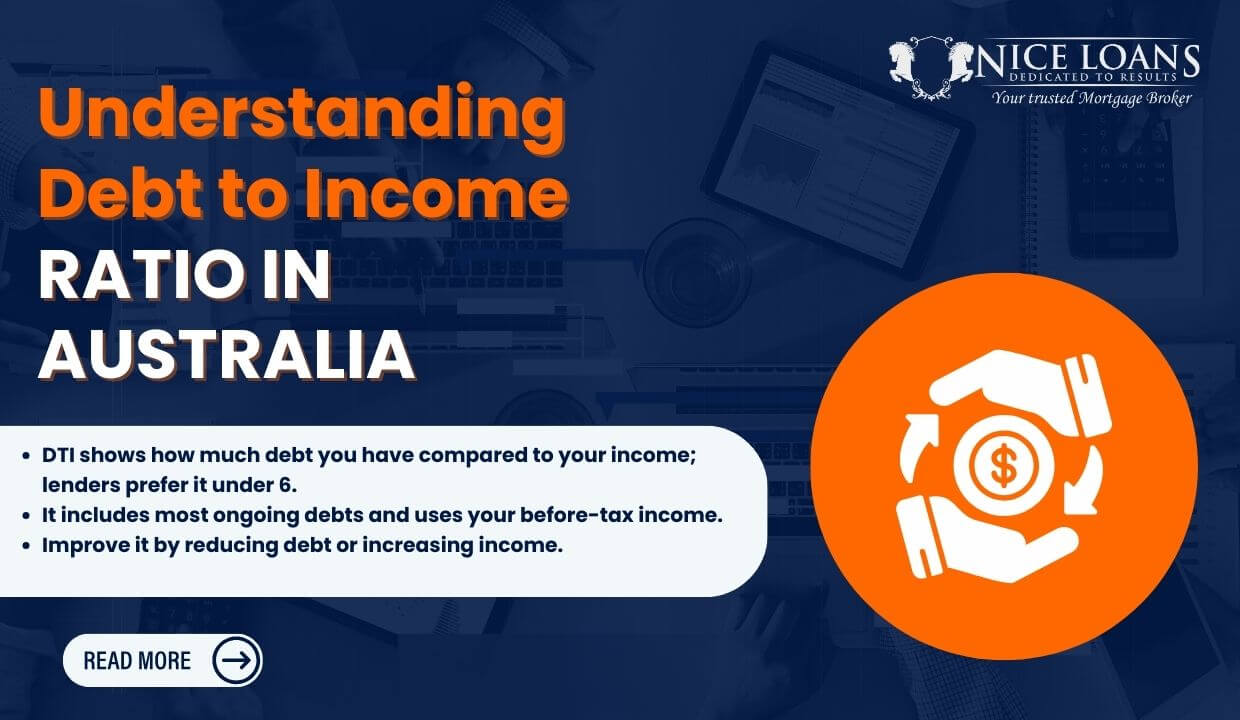
When applying for a home loan, it is important to understand your debt to income ratio to identify areas to improve before submitting your home loan application. It plays a key role in determining how affordable a loan will be and whether you meet the lender’s requirements and can manage monthly repayments. According to the DTI ratio in Australian standards, the average ratio to qualify for a loan is below 6.
Understanding your DTI ratio and making improvements to enhance it increases the chances of your home loan being approved while securing a loan that best fits your financial situation.
What is Debt to Income?
Let’s look at what debt-to-income is and how it’s calculated. DTI is a term used to measure and compare the total debt you have and your gross income. This ratio shows all the debts you have remaining and helps lenders ensure that you can pay them off in the future while meeting the criteria to take out the loan.
For example, if you earn around $80,000 annually before tax. You want to borrow $350,000 for a home loan, and you also have a credit card with $5,000 limit. Your total debt is $355,000, and to find out your total DTI ratio, you have to divide your total debt by your income:
355,000 ÷ $80,000 = 4.44
By this calculation, your DTI is 4.44, meaning your ratio is 4.44 times your income.
The calculated ratio indicates that you are managing all your existing debts well and are less likely to struggle with repaying any future obligations. Many borrowers compare their loan amount to their income to see how close they are to the lender’s maximum ratio limit.
Single parent looking into home loans? Look up the Family Home Guarantee Scheme and save thousands on your deposit!
How Does DTI Affect Home Loan Approval?
Debt to income plays a crucial role in home loan approval. If most of your income is already going towards your debt, lenders might hesitate to lend you more money. The rest of the approval criteria will not be an easy feat to crack. Keeping your ratio within a healthy range before applying for a home loan is important.
A lower ratio (usually under 4 or 5) means you are in a stronger position to manage debts and repay a home loan comfortably. Lenders see this as a sign of financial stability and money management. A higher ratio makes it difficult for you to acquire more loans. If your ratio is above what they require, it decreases your chances of getting your loan approved because there’s barely any guarantee for you. In some cases, they might lower the limit you can borrow, require a high deposit, or simply reject your application.
Need a home loan in a hurry? Check out How to speed up the home loan approval process!
Is a DTI of 7 Acceptable? What Australian Banks Really Allow in 2025!
Some Australian banks may allow a DTI of up to 7, but only in certain special cases. This usually happens when you have a high income and enough money even after excluding the expenses. Which means you have a salvageable income and can make payments on time comfortably while covering all your living expenses, regardless of the debt obligations. Your application is more likely to get accepted by lenders.
Now, most of the lenders are becoming more and more strict about this rule. According to the Australian Prudential Regulation Authority (APRA) guidelines, ratios of 6 or above are riskier, and only a few banks are approving them than before. APRA monitors the risk closely and sets guidelines that influence how much risk leading banks are allowed to lend. As of now, there are very few new home loans that have a ratio over the average Australian standards.
Also, if you have a strong credit score and big deposits on your home loan, you can choose smaller lenders that can be more flexible than major banks. But they are more costly compared to the banks and have stricter rules.
Since September 2025, Student Loan HELP/ HECS has been officially excluded from the official DTI figures, but lenders will still look at them to determine if you can afford home loan repayments. Even though HECS might not be calculated in your DTI, lenders might still include it in your repayment obligations when checking how much you can actually borrow.
Read: When to Refinance a Home Loan?
What Income is Used to Calculate Debt to Income Ratio?
For the loan-to-income calculation, lenders use your income before tax. This includes your regular salary, self-employment profits, and other earnings such as overtime, commissions, bonuses, or rental income. But in some cases, lenders might consider investment income, dividends, or government allowances if they are verified and regular.
Similar: How to Calculate Rental Yield?
Calculating your before-tax income helps you understand how much money you have available to pay your debts. How it’s calculated depends on the type of income:
- Salaried (PAYG) workers: For this type, the calculation should be your annual income before tax. But it does not include compulsory super contributions. This does not include compulsory super contributions, but regular allowances, like car or travel payments, might be counted.
- Self-Employed: Use your net profit before tax, including some allowed adjustments. In this case, lenders check your average income from the past few years to make sure it’s stable.
- Other Incomes: You can also count incomes from casual work, contracts, overtime, bonuses, commissions or rental income if the income is regular and you can prove it.
The ratio includes all income sources before tax, regardless of where they come from, but lenders might limit how much they count if your income isn’t regular or guaranteed.
Through Deposit Bonds, secure home ownership without an upfront deposit!
Why is the DTI Ratio Important?
Debt to income ratio tells the bank whether you can afford to take new loans without putting too much stress on your finances. It helps lenders assess your overall financial health and determine how much you can actually borrow.
A low ratio shows that it’s less risky to lend you the money, and you can manage your money well. Having a healthy ratio can help you get better interest rates and more flexible loan terms on things like personal loans or home loans. Maintaining a strong ratio can improve your long-term financial stability, and it makes it easier to plan for future goals such as investments or property upgrades.
Using the Debt to Income Calculator.
Using a DTI ratio calculator helps you know and analyse how much more loan you can take. This gives you a quick idea of whether your finances fit what the Australian lenders look for. Let’s look at how the lending works and how you can calculate your debt to income ratio with the personal financial information you have.
Have you just begun property investment and realised you’re running at a loss? There’s no need to fret, negative gearing in property investment, if done right, can help you achieve tax benefits and long-term growth despite the short-term loss.
How to use it:
- Enter your income before tax. Add your annual salary and any regular income, such as bonuses, overtime, and rent.
- List all your debts: such as home loans, car or personal loans, credit card limits, buy now pay later accounts, and add student loans as well, since lenders still tend to consider these.
See how to pay off your mortgage faster for tips to be mortgage-free in only 10 years!
- Now, let the calculator do the maths: DTI+Total debt ÷ gross annual income and check your result.
- With your DTI ratio now, you can go ahead and plan for your future financial decisions. Your ratio result will help you understand how much more borrowing capacity you can take on.
Many borrowers use a debt-to-income ratio calculator to get a quick idea of how lenders might view their financial capability to take on more debt.
Want to estimate how much you can borrow? Use our Borrowing Power Calculator
What Debts Are Included In The Debt to Income Calculation?
When calculating the DTI, lenders look at all the debts and regular payments you are responsible for. These are the main types of household debts that are included in the calculation:
- Mortgage: Repayments of any property or home are made monthly.
- Loans on Vehicles: Any car loans or vehicle finance you are paying off currently.
- Personal Loans: Continued repayments of personal loans.
- Credit Card Debt: Card balance, which should be paid monthly.
Try bridging loans to purchase a new home, even when your old property has yet to be sold.
- Higher Education Contribution Scheme/ Higher Education Loan Program (HECS-HELP) or Student Loans: Regular payments you make towards student loans. (This does not count in the official DTI report, but lenders still consider them to assess whether you can afford home loan payments.)
- Buy Now Pay Later (Afterpay): Payments for the items you have purchased via Afterpay or other similar programs.
Also Check Out: Reverse Mortgage and Home Equity Release.
- Leases and Hire Purchase: Payments for items you lease or are buying through a payment plan.
- Portfolio and Investments Loan: Payments of the loan that is purchased for business and investments.
- TAX Debt: Any unpaid taxes you owe to the Australian Tax Office (ATO), including penalties or instalment plans.
- Trade Support Loans: Trade loans and payments.
- Business Liabilities: Debts or loans of a company, partnership or trust. (Lenders may include personal guarantees on these loans if they affect your personal financial obligations.)
- Child Support or Alimony: Payments made to a child or former spouse by court order.
- Medical Debts: Ongoing payment of medical bills gets calculated if they are formal credit obligations with credit limits. If they are on and off, irregular bills may not count.
- Other Financial: This includes monthly payments for things like utilities, insurance, or bills that can lower your disposable income.
Note: Lenders only include debts that require regular, ongoing repayments, not occasional or one-off payments. It makes sure the DTI calculation reflects your true capacity to take on new credit.
Also Read: Refinancing a home loan with bad credit.
How to Improve Your DTI Ratio
To improve your DTI ratio, you either need to reduce the debt or increase the income. Here are some of the ways to improve your DTI:
- Cancel or limit credit cards you rarely use, especially with a high limit. When lenders count your total debts, this will help your ratio appear lower. Avoid taking in new credit cards as well as other loans before applying for the home loan, cause this can increase your DTI.
- Create a budget that includes all necessary expenses, stick to it, and track your spending carefully. This avoids overspending and frees up money to pay down debts.
- Cut unnecessary subscriptions and expenses such as memberships, streaming services and subscriptions. This saves up the money and helps pay off debts faster.
Discover how lenders secure themselves against financial loss with lenders mortgage insurance (LMI)!
- Consolidate your existing debts by combining multiple smaller debts, ideally with a lower interest rate. This way, you can pay a smaller and simpler amount monthly, and it helps save up money and reduce financial stress.
- Consider borrowing smaller loans; with smaller loans, you will be able to make smaller monthly debt payments as well, and it will lower your ratio. With a lower DTI, you will make yourself seem safer to lenders. Even for the existing loans, paying off big debts first can improve them faster.
- Increasing your income helps you lower your ratio even if your debt stays the same. Higher income balances out your debt with what you earn and makes it look better.

Discover Stamp Duty Costs in QLD for this 2026 season!
Note: Lenders in Australia often apply APRA serviceability buffers even if your DTI ratio is within an acceptable range. This means they assess your loan repayments as if the interest rates are higher than the current rate. This way, they are assured you can afford repayments on time and can still afford repayments if the rate rises.
What If Your DTI Remains High for a Specific Loan?
While a low debt to income ratio is generally favourable, if you need a big loan and your DTI remains high throughout the course of the application, there are a few alternatives that can be taken to. However, it is still advisable to make every possible effort to lower your DTI, as this greatly increases your chances of approval, improves loan terms and reduces long-term financial strain.
You might be interested in: Conditional Approval Vs Unconditional Approval.
Adding a Co-Signer or a Co-Borrower
Combining incomes with a co-signer or a co-borrower who has a better financial profile can help strengthen your application. If your debt to income ratio remains high and you need a loan in an emergency, applying with a safe candidate is a viable option. Sometimes a partner’s financial stability is enough security for the lender.
A co-signer guarantees the loan but isn’t responsible for monthly payments; however, a co-borrower, on the other hand, shares equal responsibility for repayment.
Low Doc Home Loans are perfect for self-employed borrowers looking to purchase their dream home, but don’t quite fit the eligibility requirements for a standard home loan!
Seek Atypical Lenders
Lender terms can vary from provider to provider; different lenders have different risk tolerances. While the basic criteria remain similar, there could be various banks, credit unions and online lenders that pardon a lower DTI, but there’s got to be a catch, so remember to proceed with caution. Such flexibility often comes with higher interest rates, stricter repayment terms or additional fees, and pushing in haste can lead to a much worse financial swamp.
Discover the Australian Government Help to Buy Scheme to buy your first home with only 2% deposit!
Consider Alternatives
If your high DTI makes it difficult to qualify for a traditional loan, explore other options. You can opt for rent-to-own arrangements for homes, lease for an agreed fraction and eventually buy the same property. There are also prospects of refinancing your home loan, choosing a better option and accessing cash grants can help strengthen home finances and support expenses.
Guarantor home loans are suitable for potential home owners who have close family members with enough equity in their own property to support the potential owner’s home loan. These alternatives can help you move forward while you work on lowering your DTI over time.
Improving your ratio is not only about being qualified for the loan; it also makes your overall finances stronger, and lenders are most likely to approve it.
Not sure where you stand? Speak with a trusted mortgage broker based in Brisbane to get expert guidance and personalised loan options.
FAQs
What are common DTI mistakes?
Common DTI mistakes include overlooking small debts, underestimating living expenses, counting net income instead of gross income, and spending too much before getting your mortgage. These are some of the common mistakes borrowers make while calculating and before getting the mortgage approved.
Does a lower DTI always mean approval?
Lower DTI does increase the chances of your loan getting approved. However, lower does not automatically guarantee loan approval; lenders look at your ratio along with other factors such as credit score, employment history, and income before making the final decision.
Try the debt recycling strategy to build wealth while in debt!
Do I need to do anything after I pay off my mortgage?
Yes, you still need to do a few things. Firstly, ask the bank to remove your name from the mortgage so the property is fully in your name. Then you need to check your property insurance and records to make sure you fully own it. You can also close or change any bank accounts linked to your old loan account