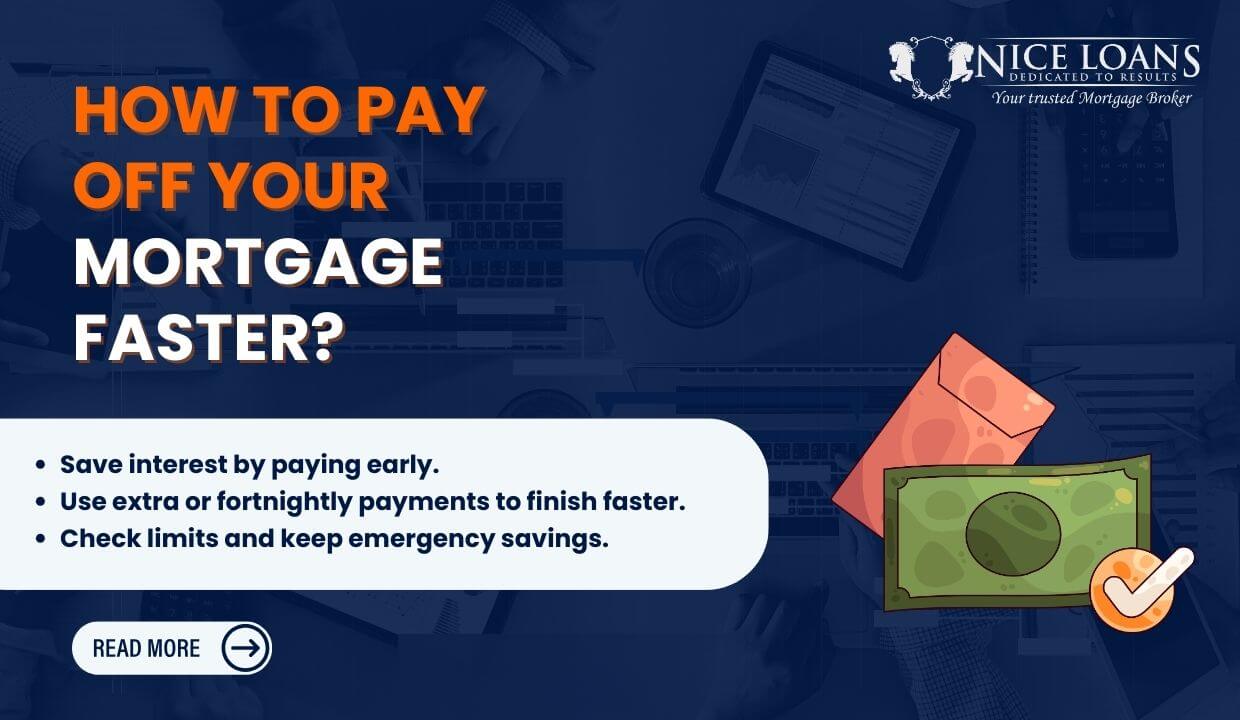
Burdened with a heap of debt, wondering how to pay off your mortgage faster? You’re just where you had to be!
Owning a home is one of life’s biggest achievements. It represents stability and security in a place that is truly your own. However, as exciting as the experience can be, the long-term commitment of a 25 or 30-year mortgage can be overwhelming, especially for homeowners with already substantial debts. The idea of making repayments over decades can feel less like an achievement and more like a lifelong burden, one left as compensation for happiness.
Find a guarantor for your home loan and utilise their property equity to boost your approval!
The good news, though, is that you don’t need to follow the full loan term. Simply with the right strategy and planning, it is possible to reduce a 30-year loan to 10 years.
With our comprehensive guide, you will be able to explore and apply proven tips to help pay off your mortgage quicker. Whether you’re only starting your ownership journey or looking to accelerate your current loan, these techniques can help you move from a life of debt to a position of true financial independence quicker than you thought possible.
Building your own home? Learn how to get approved for owner builder home loans to access funds for your self-build!
Is it Good to Pay Off Your Mortgage Early?
In several cases, definitely! Paying your mortgage early can be an excellent financial decision. Eliminating your home loan early is generally considered a low-risk strategy. Which is to say that there isn’t much to lose when you’re opting to clear off your home loan before your loan term expires.
Check Out: How to Get a Home Loan If You’re Self Employed?
Not only does it help save on interest, but it also provides something beyond materialistic measure: peace of mind. With reduced financial stress and greater flexibility in your lifestyle choices, you can build equity faster and also gain long-term financial security.
However, you need to remember that paying off your mortgage early isn’t always the right choice. Let’s say your interest rate is very low, which means that your mortgage is relatively inexpensive. In that case, you might potentially earn higher returns by investing extra money in assets, including shares or investment property.
Did you know that you could use your super to buy a house?
Why Pay Off Your Mortgage Quickly?
The benefits of paying off your home loan sooner can go far beyond simply clearing a debt. It can be a powerful financial move.
- Interest is Saved: Mortgages being long-term loans, it goes without saying that interest adds up over decades. The faster you reduce your principal balance, the less interest you pay overall. Even small repayments can help reduce your loan and save you a significant amount.
- More Money Available for Your Goals: With the mortgage paid off, you eliminate one of your largest monthly expenses. This extra money, the freed-up cash flow, can be put toward retirement savings, investments, supporting your family and everything else you wish to achieve.
Learn how to assess your debt to income ratio to identify areas to improve before submitting your home loan application!
- Reduced Financial Stress: Debt is a big source of pressure. Paying off your house early removes a major financial obligation and provides a sense of peace. The emotional relief of owning your home outright is just as valuable as having a bunch of financial savings.
- Equity is Built Faster: When you accelerate repayments, you naturally build equity more quickly. Not only does this strengthen your financial position, but it also provides greater security when property values fluctuate.
- Financial Risk is Minimised: With your mortgage paid off early, regardless of your income changes, your home remains your own. Having no mortgage significantly reduces financial vulnerability.
Read: Benefits and Risks of Debt Recycling Explained.

10 Tips to Pay Off Your Mortgage in 10 Years
Paying off your mortgage can feel like standing at the very bottom of a huge mountain; you can barely see the peak. Your goal seems far away, and the commitment can feel overwhelming. This is where you need the discipline and financial awareness to dramatically shorten the timeline, even reducing your mortgage to just 10 years.
Even before you make home loan applications, the most important step is to understand the ins and outs of the offered mortgage. A clear vision can allow you to make smart, strategic decisions rather than relying on guesses and aspirations.
Once you know exactly how your loan works, you can apply targeted strategies to reduce interest and accelerate principal payment. What are these strategies, you ask? Well, let’s begin.
Buy a new home before selling your current one with bridge loans!
Make Fortnightly Repayments
One of the simplest, most effective ways to pay off your mortgage faster is to increase the frequency of your repayments. Instead of making the usual one monthly payment, consider switching to fortnightly repayments.
This is how it would work: there are 12 monthly payments in a year, but 26 fortnights. If you take your total monthly repayment and divide it in half and pay that amount every two weeks, you’ll end up making the equivalent of 13 full monthly payments per year instead of 12.
For example, your monthly repayment of $2000 turns into a fortnightly repayment of $1,000. Here, your total paid annually becomes $26,000 instead of $24,000. The extra payment every year goes directly toward reducing your principal, which lowers the interest charged over time. Try using our fortnightly and weekly repayment calculator to check out the accurate numbers.
By making frequent repayments, you reduce your balance slightly sooner each month, which effectively reduces the interest calculated. Mortgages follow an amortisation schedule, meaning your early repayments are weighted heavily toward interest rather than principal. Understanding the concept of principal and interest can help you navigate these ideas better.
This seemingly small adjustment can cut 4 to 6 years off a 30-year mortgage and help you save tens of thousands in interest. With minimal lifestyle change, you can restructure how and when you repay your mortgage. Consistency is key to significantly shortening your mortgage term while keeping your budget manageable.
Find out exactly how much you need for a house deposit and whether government grants and schemes can help achieve the specified target!
Make Extra Payments
Another fast and effective way to reduce your mortgage term and save on interest is to make extra repayments. That is, if your home loan allows. Even minor increments to your regular payment can make a meaningful difference over time. By contributing extra toward your principal, you lower the balance on which interest is calculated, which means future interest charges decrease as well.
Rent now with the option to buy later with Australian rent to buy schemes!
Do remember to check with your lender if you’re allowed to make extra repayments, if there are any annual caps or fees, and whether extra funds are applied directly to the principal or the future interest.
You can put tax refunds, work bonuses, commission payments, inheritance or proceeds from selling your shares and assets into your mortgage. Whatever is available does the job. Instead of absorbing these funds into everyday spending, using them strategically can reduce your loan balance.
Discover real profit after expenses on investment property by calculating your rental yield!
Refinance for a Better Plan
Refinancing your home loan, in other words, replacing your old mortgage with a new loan, can be a powerful strategy to accelerate repayment, especially if you can secure a lower interest rate or better loan features.
You’ve got to begin by reviewing your current loan and identifying the features that matter to you. It could be a competitive interest rate, flexibility on extra repayments, offset or redraw facilities or low fees.
Related: Refinancing a Home Loan with Bad Credit.
Next, you compare your loan against similar products in the market, and when any one fits the search, approach your current lender. Since several lenders are willing to reduce rates to retain existing customers, you might not need to go through the refinancing hassle.
However, if you do refinance, you need to make sure you get the benefit. Run the numbers carefully and get the low interest rate with better flexibility and faster payoff. When done correctly, refinancing can reset your mortgage strategy and move you significantly closer to being debt-free.
Are you self-employed, looking for a home loan? Low doc home loans offer just the flexibility you need!
Open an Offset or Linked Savings Account
First off, what is an offset account? An offset account is a savings or transaction account linked directly to your mortgage. Instead of earning interest on your savings in the traditional way, the balance in your offset account is used to reduce the amount of your mortgage that is charged interest.
For instance, if you have a $500,000 mortgage and a $20,000 in your offset account. You will only be charged interest on $480,000 and not the full $500,000. Here, the amount on your offset is subtracted from your total mortgage.
In most cases, mortgage interest is calculated daily; every dollar sitting in your offset reduces the interest charged. Over time, this benefit can help you significantly reduce your total interest and help you repay your mortgage faster without locking your money away.
However, certain loans with offset features come with higher fees or slightly higher interest rates. If your offset balance is consistently low, the interest savings may not outweigh the cost of the feature. In that case, it’s better to make direct extra repayments instead.
Also Read: Lenders Mortgage Insurance (LMI): Everything You Need to Know
Avoid an Interest-Only Loan
To pay down your mortgage faster, it’s best to avoid interest-only loans. While they offer lower interest rates initially, they do not reduce the total loan payable or the principal during the interest-only period. Which means that your debt stays the same, and you end up paying significantly more over time.
Interest-only loans can be useful in specific situations, including short-term investment strategies, but for most homeowners aiming for long-term financial security, they only slow down your path to financial freedom.
By avoiding interest-only loans and combining them with smart spending adjustments, you’ll be well on your way to paying off your mortgage in a fraction of the original term.
Study stamp duty implications in QLD to understand the rules and help reduce costs!

Rent Out a Room
You alone don’t need to bear the weight of your mortgage repayments. Turning your spare room into a source of income can accelerate your mortgage payoff and help you reduce your loan term significantly. By renting out a room, you have someone else contributing a share to your mortgage each month.
From short-term rentals providing for travellers to long-term tenants offering a stable and predictable income, the options are flexible. Remember to check on local regulations and insurance implications. For instance, if you have first home buyer schemes in effect, certain rules under certain grants may restrict you from having tenants for a specified time period.
The extra income directly reduces your mortgage principal and helps you pay off your loan faster without cutting into your existing budget. Even a modest income can provide years of financial security later on.
Secure your dream property without an upfront deposit with deposit bonds!
What Do You Need to Consider When Making Extra Payments?
As we’ve previously established, making extra mortgage repayments can significantly reduce your loan term and interest costs, which then helps pay off your mortgage faster, but it’s important to approach overpayments strategically. Consider getting financial advice through lenders and mortgage brokers before you commit.
Understand the concept of loan to value ratio to find out how it impacts LMI payments!
Extra Payment Limit
First, you need to understand your loan terms and limits. Not all mortgages allow unlimited extra repayments. Depending on your loan type, you may be allowed to overpay up to a certain amount of your balance each year. Regulations differ between fixed-rate loans and variable-rate loans. Some lenders also charge fees if you exceed extra payment limits, so always review your loan agreements carefully.
Did you know that you could access home equity without selling with reverse mortgages and home equity release?
Consider Your Cash Flow
Before you commit to higher repayments, assess how much extra you can realistically afford. You might be able to afford it now, but what about a month later? Can you remain consistent? You see, the key to financial security is discipline. Being able to stay disciplined and consistent is more powerful than short bursts of aggressive input that can lead to financial stress in the future.
Try the Australian Help to Buy Scheme to buy a home with just 2% deposit!
Prioritise High-Interest Debt First
Prioritise your other debts, credit cards, car loans or personal loans, which often carry significantly higher interest rates than your mortgage. In several cases, it makes more sense to eliminate these high-interest debts first before you push on mortgage repayments. Inexpensive debt pays off much faster and provides easy financial relief, and also effective returns.
Are you a single parent looking to purchase a home? The family home guarantee scheme is just the option for you!
Build an Emergency Fund
Before making overpayments, ensure that you have a financial safety net. You cannot spend all your earnings to repay your debt and have nothing to support you in need. Ideally, one should have three to six months’ worth of living expenses left untouched as an accessible emergency fund. This protects you from unexpected events such as job loss, medical emergencies, home repairs and economic disasters.
You might be interested in: Negative Gearing vs Positive Gearing: Pros and Cons
Mistakes to Avoid
While paying off your mortgage faster is a beneficial financial goal and also extremely admirable, doing it the wrong way can instead slow your progress and generate unnecessary risk. Here are some common mistakes homeowners make and ones you should avoid:
- Ignoring Extrapayment Limits: The place caps on how much extra can be repaid every year depends from lender to lender. Particularly with fixed-rate loans, the limits are strict. Exceeding these limits may trigger fees or costs. Understanding these rules is essential to ensure your extra payments actually save money.
Find out exactly how to get pre-approved for a home loan and get your estimation of how much you can borrow in no time!
- Having no Emergency Fund: You might assume that emergency buffers are unimportant, but as essential as it is to accelerate your mortgage, financial security always comes first. Without an emergency fund, unexpected expenses could leave you in danger.
Understanding conditional and unconditional approval helps meet conditions, complete loan valuation, and swiftly settle any home loan!
- Ignoring Retirement Contributions: It can be tempting to put every penny into your mortgage, but long-term wealth building is just as important. Keep the balance between extra mortgage payments and retirement contributions to secure a better future.
Discover home loan alternatives for self-employed individuals!
- Overlooking Investment Opportunities: In several cases, investments can generate much higher returns than the interest you are saving by paying off your mortgage early. You need to be able to make proper evaluations of an opportunity before committing yourself to any strategy.
Find out how much house you can afford and set a realistic budget to achieve ideal homeownership!

Get Financial Advice
To pay off your mortgage early is a dream for millions across Australia. To do so, you’ve got to tread wisely; you need to opt for strategies that suit not only your financial situation but also your goals and lifestyle.
If you’d like tailored advice or want to explore your mortgage options further, get in touch with Nice Loans, your trusted mortgage broker based in Brisbane. The team can help you create a roadmap to financial freedom. With the right guidance, you can move forward with clarity and confidence.
FAQs
How much extra should I pay to cut my loan to 10 years?
The amount depends on your loan balance, interest rate and remaining term. You simply need to know that even small additional payments can make a meaningful difference. Try using our extra repayment calculator to see exactly how much you need to contribute to reach a 10-year payoff goal.
Can you pay extra principal anytime?
Mostly, yes. Where some lenders charge overpayment fees or place annual caps, some don’t. You must understand the rules and perform accordingly.
Does paying off your mortgage affect your credit score?
Generally, paying off your mortgage does not harm your credit score, not in the long term at least. However, a short-term fluctuation can happen due to credit mix, but overall financial stability only improves.
Should I refinance or invest extra funds?
Refinancing or investing extra funds depends on your financial goals and opportunity costs. Where refinancing helps achieve better loan terms, investing extra funds can help directly pay off your mortgage quicker. Essentially, the goal is the same; you just need to make comparisons and decide in accordance with your financial capability.